6 m³ LHD Loader Applications: When Is a 14-Ton Underground Loader the Best Choice?
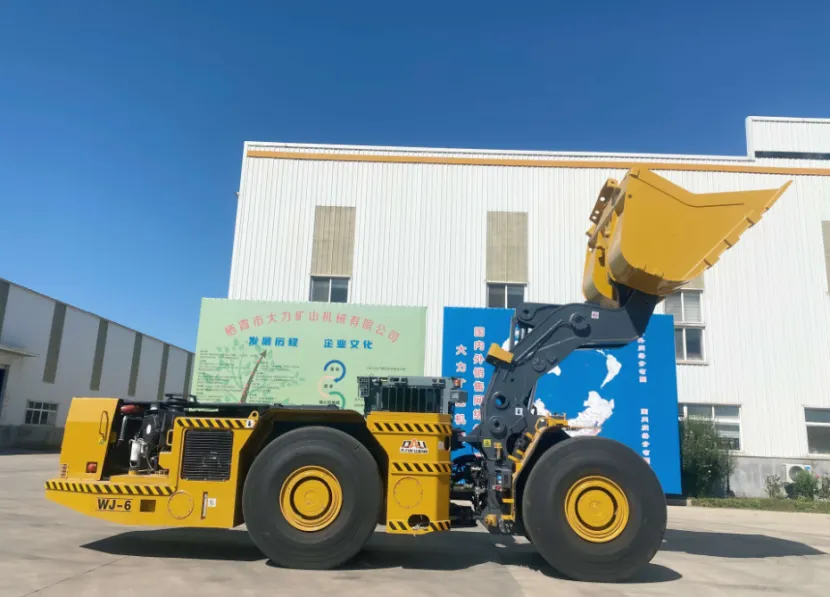
Choosing a 6 m³ LHD loader is not only about buying a larger machine. In underground mining, the better question is simple: can this loader move more ore without causing trouble in your tunnels, ventilation system, maintenance plan, or daily production rhythm? A 14-ton underground loader often becomes the right fit when a mine has outgrown small machines but still needs good mobility underground. For many medium-to-large underground metal mines, the 6 m³ LHD loader size class offers a practical balance between payload, bucket capacity, traction, and cost per ton.
What Is a 6 m³ LHD Loader?
A 6 cubic meter LHD loader is an underground mining loader built to load, haul, and dump broken ore in confined mine spaces. It is larger than small narrow-heading machines, but it is still more flexible than heavy bulk-mining equipment. That middle position is exactly why many buyers compare this class during underground loader selection.
Payload and Bucket Capacity
The DALI WJ-6 has a 6 m³ standard bucket and a 14,000 kg payload. In daily work, that means fewer loading cycles than a smaller loader when material density and bucket fill are right. Better bucket capacity can reduce low loading efficiency, but only when the machine fits the tunnel and the haul route.
Size and Tunnel Match
Tunnel fit comes first. This model is designed for a 4.2 m × 3.8 m tunnel size and above. That figure matters because limited tunnel clearance can slow turning, raise tire wear, and make operators nervous. The machine’s tramming size is 10644 × 2700 × 2505 mm, with 424 mm ground clearance, so you should check drift width, height, road condition, and turning zones before purchase.
Where Does a 14-Ton Underground Loader Fit Best?
A 14-ton underground loader is best used where the mine needs stronger output but does not want an oversized machine. You see this often in production areas where small loaders create longer cycle time, or in development zones where faster muck removal keeps crews moving. The real value appears when loader size, haul distance, and ore handling points match each other.
Medium-to-Large Underground Metal Mines
For underground metal mines, this size works well in gold, copper, lead-zinc, iron, and similar operations with steady ore movement. In medium-to-large underground metal mines, a smaller loader may take too many trips, while a larger unit may need more tunnel development. A 6 m³ class machine can be the best LHD loader for medium underground mines when production targets are rising but space is still a constraint.
Ore Haulage
In underground ore haulage, the loader may move material from drawpoints to ore passes, trucks, crushers, or stockpiles. When loading broken ore after blasting, the key numbers are not only payload. You also need to look at haul distance, road grade, turning radius, dumping height, and truck-loader matching. On short-to-medium underground haulage routes, a 14-ton payload can help lower fuel use per tonne moved.
Development Headings
In development headings, the loader often clears muck after blasting and helps the heading advance faster. A 6 m³ machine can work well if the tunnel profile is large enough and the road base is stable. Nobody likes a loader waiting at a corner because the drift is just a little too tight. That small mismatch can waste a whole shift.
Production Loading in Stopes
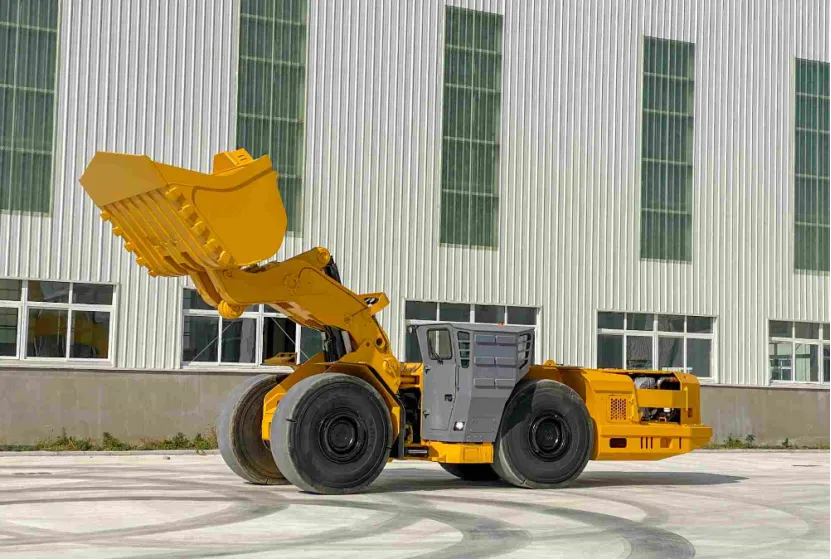
For production loading in stopes, the goal is fast, steady ore removal. A 6 m³ loader supports production loading where the muck pile is large enough and the dump point is close enough. It can improve underground mining productivity by reducing repeated trips, poor bucket utilization, and idle time between blast, mucking, and haulage.
When Should You Choose This Size Class?
The best time to choose this class is when the mine needs more tonnes per shift, but tunnel limits still matter. If your current loader causes high cost per ton, repeated queueing, or poor truck filling, it may be time to review LHD loader selection criteria more carefully.
When Smaller Loaders Create Bottlenecks
If a small loader needs too many cycles, costs rise fast. More trips mean more fuel, more operator time, more tire wear, and more maintenance downtime. A 6 m³ diesel LHD loader can reduce that pressure when the haul route is not too long and the loading area has enough space.
When Bigger Loaders Add Too Much Cost
A larger loader is not always better. Bigger machines may require wider drifts, stronger roadways, more ventilation, and more service space. If your production does not need that scale, the cost can feel heavy. So, when to choose a 6 m³ LHD loader? Choose it when the mine needs stronger loading capacity without rebuilding the whole layout.
How Do Key Specifications Affect Daily Work?
Specifications only matter when they solve real site problems. A brochure number should connect with a task underground: digging hard muck, climbing a ramp, braking safely, or keeping air cleaner in a work tunnel. That is where a buyer should slow down and read the details.
Power, Traction, and Breakout Force
The DALI WJ-6 lists 250 kW power, 287 kN max traction, and 224 kN max breakout force. These figures support heavy digging, ramp travel, and consistent loading. Its laden climbing ability is 20°, which is useful when ramps and loaded travel are part of the cycle.
Safety, Braking, and Operator Comfort
Operator safety is not a nice extra underground. It is part of production reliability. The machine uses a ROPS and FOPS canopy, 4-wheel driving and braking, and a SAHR braking system. It also has low cab vibration and automatic alarms for oil temperature, oil pressure, and electrical systems. Remote control is available, making it a possible remote control LHD loader for hazardous areas.
Ventilation and Emissions
Diesel machines bring ventilation challenges. The WJ-6 uses a catalytic purifier with silencer to reduce air and noise pollution in the working tunnel. That can help when you are comparing a diesel LHD loader for underground mining equipment fleets where airflow, heat, and noise already need close attention.
Why Consider DALI WJ-6 for These Applications?
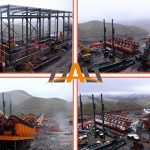
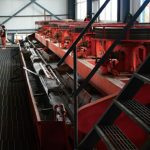
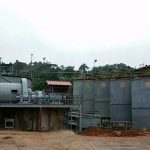
DALI has worked in underground mine equipment and ore processing equipment since 1998. Its factory covers 130,000 square meters, with more than 200 employees, including about 90 technicians and engineers. The company provides design, production, installation, training, spare parts, and EPCM services for ferrous, non-ferrous, and non-metallic mines. Its machines serve more than 900 mines, and it has built more than 500 mine processing plants. That background gives buyers a practical supplier profile, not just a single-machine seller.
Product Fit for Real Mine Work
The DALI WJ-6 diesel LHD loader is built as a compact and lightweight LHD for narrow vein mining, with reduced ore dilution, better flexibility, and operator safety. Its articulated frame has a 42° steering angle, which helps in tighter work areas. For mines checking how to choose an underground LHD loader, this model is worth reviewing when the required mix includes ore haulage, development headings, and production loading.
Cost and Application Balance
A good loader should help you lower cost per ton without creating new trouble. The DALI product range covers underground vehicles, mine process plants, auxiliary equipment, and parts, so buyers can discuss more than one machine. If your site needs a LHD loader for underground mining with 14-ton payload capacity, the DALI WJ-6 underground loader can be checked against tunnel size, ventilation, truck matching, maintenance skill, and daily tonnage target.
FAQ
Q1: What Is a 6 m³ LHD Loader Used For?
A 6 m³ LHD loader manages diverse underground loader applications. It handles broken ore loading and underground ore haulage. Furthermore, it executes mucking after blasting, development headings clearance, and production loading in stopes.
Q2: When Should a Mine Choose a 14-Ton Underground Loader?
Sites deploy a 14-ton underground loader when smaller units cause extended cycle times. Undersized machines yield poor bucket utilization, inflating the cost per ton. Simultaneously, physical drift constraints prevent utilizing larger equipment.
Q3: What Tunnel Size Is Required for a 6 m³ LHD Loader?
Spatial parameters vary by model. For the DALI WJ-6, engineers recommend a minimum 4.2 m × 3.8 m tunnel size.
Q4: Is a Diesel LHD Loader Suitable for Underground Mining?
Yes, a diesel LHD loader operates effectively underground. However, ventilation capacity and emissions control must adequately support it. Furthermore, road grade, maintenance support, and haul distance must match the machinery.
Q5: How Can a 6 m³ LHD Loader Reduce Cost per Ton?
It lowers the cost per ton by transporting greater volumes per cycle. This fundamentally eliminates redundant trips. Additionally, it optimizes truck-loader matching and maximizes equipment utilization across suitable mine layouts.
About Us
Qixia Dali Mining Machinery Co., Ltd was established in 1998, located in Yantai City.
The company is mainly engaged in the design, development, production, installation and training of underground mine equipment and ore processing equipment, spare parts supply and sales.
More
Contact Us
- Xinbang Rd, Private Economy Park, Qixia, Shandong Province, China
- +86 173 5350 8179
- ytdali@ytdali.com
 +86 13553073459
+86 13553073459
+86 13553073459


