Underground Mining Vehicles: Automation & Electrification Guide
Why Is the Underground Mining Vehicle Market Growing?
The underground mining vehicle market is gaining attention as mines work deeper, face tighter ventilation limits, and need steadier output from each shift. North American market forecasts link growth with replacement demand, mine digitalization, and the move toward electric drivetrains.
For you, the buying question is practical: can a vehicle move more material while fitting the airflow, safety, and maintenance rules of your site?
What Is Driving New Vehicle Demand?
Ore bodies are harder to reach, while skilled operators and mechanics remain limited in many mining regions. A fleet that reports payload, location, battery state, and fault codes gives the shift supervisor a clearer view of production.
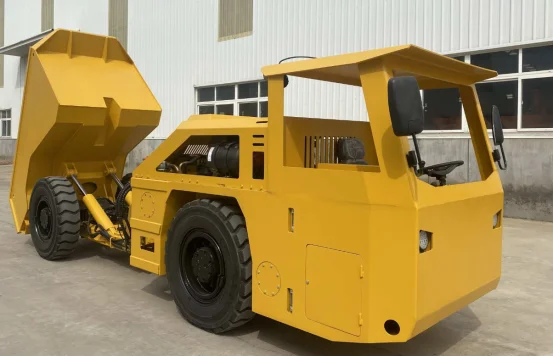
Demand also rises when a mine opens a new level and needs compact equipment that can turn in narrow headings. These needs support growth in underground mining trucks and underground haul trucks.
How Does Automation Improve Underground Haulage?
Automation works as a control layer around the vehicle. It connects sensing, dispatch, traffic rules, and operator decisions. A useful system starts with a defined task, such as tramming between a loading point and an ore pass, then adds geofencing, obstacle detection, and remote supervision. This approach lets you measure cycle time and intervention frequency before expanding the automated underground mining vehicles fleet.
Which Tasks Suit Automation First?
Repetitive haulage on mapped routes is a common starting point. The vehicle can slow at intersections, stop inside a geofence, and send a status message when it reaches the dump point.
Tele-remote operation suits areas with poor visibility, loose ground, or blast clearance requirements. Assisted steering and collision warnings can serve mixed fleets where people and machines share the same drift.
What Data Should You Track?
Track payload, travel time, idle time, battery temperature, brake events, and unplanned stops. Put those values beside ventilation readings and shift reports. A short baseline, often two to four weeks, helps you separate a software issue from a road condition or loading practice. The mine automation program then uses production data to guide each next test.
Why Are Electric Underground Mining Vehicles Gaining Share?
Battery electric mining vehicles change the cost and layout of an underground operation. They produce no tailpipe exhaust during travel, so ventilation demand can fall on routes that previously carried diesel fumes.
Electric LHD units and other zero-emission underground vehicles also shift heat and charging loads to planned service areas. The gain depends on battery chemistry, charging location, duty cycle, and local power capacity. You need a full route model before choosing pack size.
How Do Electric Drivetrains Affect Daily Work?
Electric motors deliver torque at low speed, which helps a loaded truck start on a ramp. Regenerative braking can return energy during downhill travel, subject to the vehicle controller and battery limits. Charging adds a new shift task. A practical plan reserves a bay, checks connector condition, records state of charge, and keeps a recovery procedure for a vehicle that arrives with a low battery.
How Should You Compare Total Cost?
Compare energy, ventilation, tires, brakes, maintenance hours, battery replacement, and charger infrastructure across the planned service life. Use the same payload and route assumptions for diesel and electric models.
A short route with frequent stops may favor a smaller pack and opportunity charging. A long haul may need a larger pack, a battery swap plan, or a second vehicle. This is the right way to estimate total cost of ownership for underground mining vehicles.
What Safety Checks Matter in an Underground Fleet?
Safety depends on the vehicle, the roadway, and the operating rules together. Check braking performance on the actual gradient, steering clearance at the tightest bend, visibility around the bucket or tray, and emergency isolation points.
For battery equipment, add thermal monitoring, crash protection, charging interlocks, and a response plan for damaged packs. A documented inspection routine supports underground vehicle safety and gives maintenance teams a common record.
How Can Fleet Management Reduce Downtime?
Use mining fleet management software to schedule inspections around production windows. Set alerts for brake wear, tire pressure, coolant or battery temperature, and repeated controller faults. Keep a parts list for high-wear items and record the time from alert to repair. Small delays add up underground; a ten-minute wait at every loading point can remove a full trip from a shift.
How Do You Choose an Underground Mining Truck?
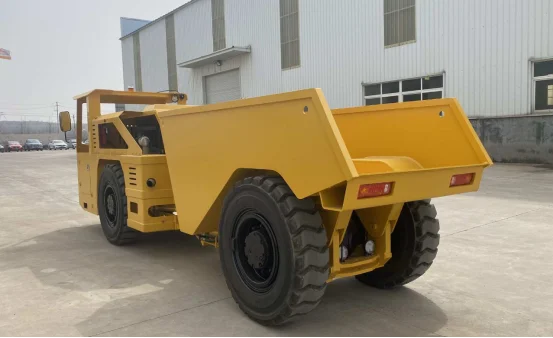
Start with the job site. Record heading width, turning radius, ramp grade, haul distance, payload, rock condition, water exposure, and shift length. Then define the required speed, ground clearance, approach angle, and charging or refueling plan. Ask for duty-cycle test data that matches your route.
A specification sheet alone cannot show how an underground truck manufacturer has matched the vehicle to your mine.
Which Questions Belong in the Tender?
Ask for payload at the rated gradient, brake test method, battery warranty assumptions, charger compatibility, remote-support scope, software update process, and training hours. Request a service response plan with stocked parts and escalation contacts. For a mixed fleet, confirm radio, dispatch, and traffic-control interfaces before purchase.
How Can DALI Fit an Electrified, Automated Fleet?
Your fleet plan may need a compact vehicle for narrow workings, an explosion-protected configuration for specific zones, or a haul truck that can run long cycles with controlled charging.
DALI’s underground vehicle range can be reviewed through its underground vehicle portfolio and underground truck category. The useful discussion starts with payload, dimensions, grade, duty cycle, and control requirements. Those inputs guide the selection of drive system, battery or engine package, braking hardware, cabin layout, and monitoring functions.
For a pilot, request route-based acceptance tests, fault-code access, and operator training. This keeps the equipment decision tied to the production problem you need to solve.
FAQ
Q1: What is an underground mining vehicle?
A: It is a machine designed to load, haul, drill, or support work below ground, with dimensions, protection, braking, and control systems suited to confined mine roadways.
Q2: How does electrification drive underground mining vehicle market growth?
A: Battery electric drivetrains support lower tailpipe emissions, reduced ventilation demand on suitable routes, and predictable torque. These operating factors create replacement and retrofit demand.
Q3: What is the first automation project for a mine?
A: Start with a repetitive, mapped haul route. Define geofences, traffic rules, remote supervision, and measurable targets for cycle time and interventions.
Q4: How do you choose an electric underground mining truck?
A: Match payload, route distance, gradient, shift length, charging time, battery warranty, and service support to measured duty-cycle data from your mine.
Q5: What should you request from an underground truck manufacturer?
A: Request route-based performance tests, brake data, charging interfaces, safety documentation, software support, training, spare-parts coverage, and a clear response plan.
About Us
Qixia Dali Mining Machinery Co., Ltd was established in 1998, located in Yantai City.
The company is mainly engaged in the design, development, production, installation and training of underground mine equipment and ore processing equipment, spare parts supply and sales.
More
Contact Us
- Xinbang Rd, Private Economy Park, Qixia, Shandong Province, China
- +86 173 5350 8179
- ytdali@ytdali.com
 +86 13553073459
+86 13553073459
+86 13553073459


