5 Key Features to Consider When Choosing an LHD Machine
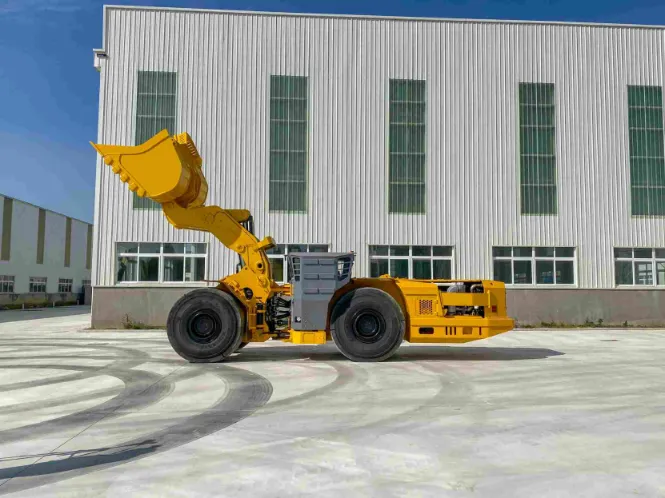
Before investing in an LHD (Load Haul Dump) machine for underground mining operations, decision makers must assess several critical features that directly influence operational efficiency, equipment longevity, and overall project ROI.
Selecting the right LHD machine is not just about capacity or size—it’s about aligning the equipment’s capabilities with your mine’s specific geological and production conditions.
Load Capacity and Productivity
Evaluating Bucket Size in Relation to Tunnel Dimensions
When selecting an LHD machine, ensuring the bucket size is proportionate to your mine’s drift dimensions is crucial. A mismatch can lead to inefficient cycles or restricted mobility.
For larger spaces, the DALI WJ-6 offers a substantial 7.5 m³ bucket suitable for tunnels up to 5m × 5m The machine is highly intelligent, safe and reliable to use and has good overall machine stability, which can significantly improve mine productivity and profitability. Choosing between these models depends heavily on your mine’s infrastructure and intended application.
Cycle Time and Tonnes Moved per Shift
Productivity hinges on how quickly and efficiently the LHD completes a loading hauling dumping cycle. The WJ-4 achieves a lifting motion time of 6.8 seconds and a lowering time of 4.4 seconds, contributing to faster turnarounds. Similarly, the WJ-6’s dump cycle includes an 8.3s raising time and 2s lowering time.
In high output mines, faster speeds and higher payloads can significantly boost daily production. The WJ-6’s tramming capacity of 18 tonnes combined with a top speed of 26.8 km/h in its fourth gear highlights its production efficiency.
Powertrain and Drivetrain Configuration
Diesel vs. Electric Power Options
Diesel powered LHDs are still dominant in remote or deep operations due to their autonomy and refueling convenience. DALI’s range emphasizes this with Volvo Euro III diesel engines in models like the WJ-4 and WJ-6 The power system adopts Volvo Euro Ⅲ emission standard engine. However, ventilation needs must be considered—diesel machines demand robust exhaust management systems.
Transmission Type and Traction Control
Transmission configuration influences how the machine handles tight turns or inclines. The WJ-4 incorporates a DANA R36000 electronic shift transmission with buffering function; Type Electronic shift with shift buffering function. This ensures smoother gear transitions, critical in confined underground settings.
In terms of traction, models like the WJ-6 boast a maximum tractive force of 342 kN, paired with limited slip differentials and Kessler axles—making them adept at handling steep gradients or slick surfaces common in deep mines.
Operator Safety and Ergonomics
Cab Design and Visibility Enhancements
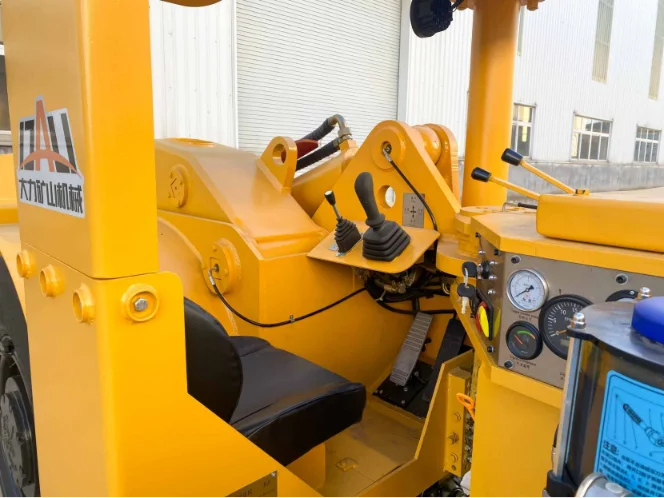
Operator safety is non negotiable in underground mining. All DALI LHD models come equipped with ROPS/FOPS certified cabins The cab meets FOPS and ROPS standard certification. In the WJ-4, additional visibility features include forward and reverse cameras as standard equipment. Cameras at forward and reverse sides, reducing blind spots during maneuvering.
Visibility isn’t just about line of sight—it’s also about staying aware in low light conditions. LED lighting systems placed strategically around the cab and chassis provide full perimeter illumination.
Control Systems and Operator Comfort Features
Fatigue over long shifts can lead to mistakes. That’s why ergonomic design matters. The WJ-6 features an enclosed cab with sound insulation, air conditioning, laminated glass windows, and a low frequency suspension seat Adjustable joysticks; Noise suppressed closed cabin; Low frequency suspension.
Control systems are equally advanced. Electro hydraulic joysticks provide intuitive command over both travel and boom functions, reducing physical strain during repetitive operations The control model is electro hydraulic proportional pilot control.
Maintenance Accessibility and Service Life
Ease of Access to Key Components for Servicing
Serviceability influences uptime. The WJ series includes centralized maintenance points for fluid checks and component access, while standard tools like a 7 inch onboard display provide real time diagnostics and fault alerts.
Additionally, modular designs on components such as transmission systems (e.g., DANA torque converters) make part replacements more straightforward.
Durability of Structural Components in Harsh Conditions
Frames built from high strength steel such as Q460 or Q550D resist deformation under repeated loading. Buckets using HARDOX 600 further enhance durability against abrasive rock loads.
Corrosion protection measures—like flame retardant hoses and sealed electrical connectors—combat high humidity environments found deep underground.
Compatibility with Mine Infrastructure and Automation Systems
Integration with Existing Haulage Systems
Before finalizing your LHD purchase, confirm that it syncs with your site’s ore passes, crushers, or conveyors. A unit like the WJ-3, with a compact turning radius of 2820 mm inside, supports tight layouts effectively Min..
In contrast, larger models such as the WJ-6 are better suited for wide tunnels but require pre-assessment to avoid haulage bottlenecks.
| Model | Bucket Size | Tramming Capacity | Turning Radius |
| WJ-3 | 3.0 m³ | 7 tonnes | 2820 mm |
| WJ-4 | 4.5 m³ | 10 tonnes | 3700 mm |
| WJ-6 | 7.5 m³ | 18 tonnes | 3494 mm |
Readiness for Automation or Remote Operation Technologies
DALI offers optional remote control systems on many models. As digital integration becomes more prevalent across mining operations, investing in automation ready platforms provides scalability for future tech upgrades.
In many underground mining projects across complex geological settings, Dali’s engineering teams have contributed insights into how equipment specification directly impacts safety margins and output targets. Their technical depth across both manufacturing and system integration ensures that equipment like LHDs aligns with long term operational strategies—not just short term capacity needs.
FAQs
Q: What does ROPS/FOPS certification mean?
It refers to safety standards ensuring protection from rollovers (ROPS) and falling objects (FOPS).
Q: Can DALI LHDs be customized for specific tunnel sizes?
Yes, DALI offers options for different bucket capacities and frame sizes to match tunnel dimensions.
Q: How often should I service an LHD?
Routine maintenance depends on usage but is simplified by centralized service points on DALI machines.
Q: Is automation available on all models?
Some models offer optional remote control systems and are CAN bus ready for future upgrades.
About Us
Qixia Dali Mining Machinery Co., Ltd was established in 1998, located in Yantai City.
The company is mainly engaged in the design, development, production, installation and training of underground mine equipment and ore processing equipment, spare parts supply and sales.
More
Contact Us
- Xinbang Rd, Private Economy Park, Qixia, Shandong Province, China
- +86 173 5350 8179
- ytdali@ytdali.com
 +86 13553073459
+86 13553073459
+86 13553073459


