Diesel vs Electric Scissor Lifts in Underground Mining
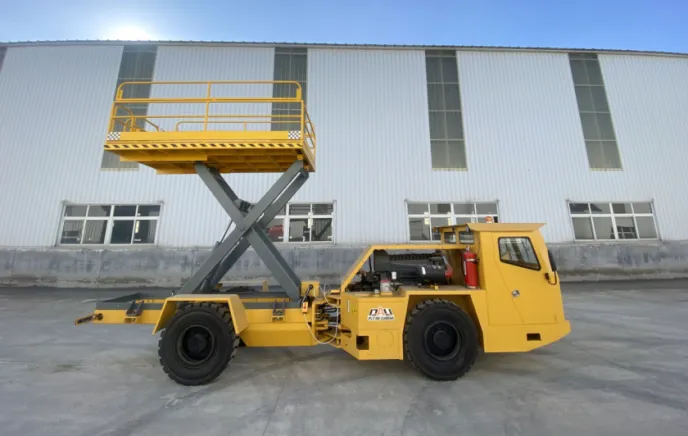
If you are comparing a diesel vs electric scissor lift for a mine, the real issue is not just lift height or sticker price. You are also choosing how much heat, noise, maintenance pressure, and ventilation demand you want to carry through every shift. For an underground scissor lift, those details stop being “nice to know” and become daily operating costs. That is why the question keeps coming up in procurement meetings, and honestly, it should.
Why Does Power Type Matter for an Underground Scissor Lift?
Before you compare specs, you need to look at the mine itself. A lift that looks cheap on paper can become expensive once it starts adding heat, fumes, and downtime underground. In this setting, the wrong power choice usually shows up later, not on day one.
Ventilation Cost Is Not a Side Issue
For underground work, underground mine ventilation cost is part of the machine decision. Air underground is already affected by blasting and mobile equipment, and mine ventilation is a major energy user. If your lift adds more exhaust and heat, you are not just buying a machine. You are also adding pressure to the ventilation system. That sounds dry, but operators feel it fast.
Heat, Noise, and Air Quality Change the Job
This is where the gap gets practical. An electric unit produces zero tailpipe emissions at the point of use, and that matters when diesel exhaust in underground mines is already a health and comfort issue. Electric mining equipment is also quieter, which helps communication and reduces fatigue in confined headings. If your team spends long hours in a narrow working zone, better air and lower noise are not abstract benefits. They change the shift.
Why Are Electric Scissor Lifts Getting More Attention?
You can see why more mines are asking about electrification. The appeal is simple: less local pollution, less noise, and usually lower running cost. But underground, the nice clean answer can get messy once you look at runtime and charging.
Lower Running Cost Can Be Real
If you are considering an electric scissor lift for underground mining, the case usually starts with operating cost. A recent scissor lift comparison found lower annual energy and maintenance costs for electric units than diesel ones, and a lower five year total cost at equivalent working height. Another underground equipment comparison makes the same point in plainer language: electricity is cheaper than diesel, and fewer moving parts usually mean easier service work. That is why electric fits so well into conversations about low emission underground equipment.
Charging Limits Still Matter
That said, you still have to live with the shift plan. The same scissor lift comparison puts a standard electric runtime at about 4 to 6 hours per charge, while underground equipment analysis also notes that electric machines can face battery and recharge limits in long, heavy-duty cycles. So if your headings run hard for long shifts, battery charging infrastructure is not a side note. It is the job. On paper, electric often looks easy. Underground, paper only gets you so far.
Why Do Diesel Scissor Lifts Still Matter?
Diesel is not “old thinking” just because electric is getting more attention. In many mines, a diesel scissor lift for underground mining still makes more practical sense. You may not love the emissions tradeoff, but you may love having the machine ready every time the crew needs it.
Long Shifts and Remote Mines Still Favor Diesel
Diesel still wins when your site is remote, your duty cycle is long, or your mine cannot yet support reliable charging. Underground equipment comparisons keep coming back to the same point: diesel machines remain strong in harsh conditions, during long shifts, and where independent operation matters more than cleaner local air. That is not glamorous. It is just real.
Familiar Service Routines Still Count
There is also the human side. If your team already knows diesel systems, training is simpler and downtime can be easier to manage. In broader scissor lift buying data, diesel units cost more to fuel and maintain each year, but they still hold their place when site capability matters more than cost. That is one reason scissor lift maintenance discussions should be honest. Lower running cost is great, but only if the machine suits the mine you actually have.
Where Does DALI Fit Today?
If you want a quick expert read on us here at DALI, here it is. We have been making underground mine equipment since 1998 in Yantai, operating a 130,000 square meter factory with more than 200 employees. Our business covers design, production, installation, training, spare parts, and EPCM service.
Our equipment has been exported to more than 80 countries and serves hundreds of mine projects. That matters because buyers in this segment usually want more than a machine. You want a supplier that already lives in underground mining, not one that treats it like a side catalog.
A Diesel Underground Scissor Lift Can Still Solve Real Problems
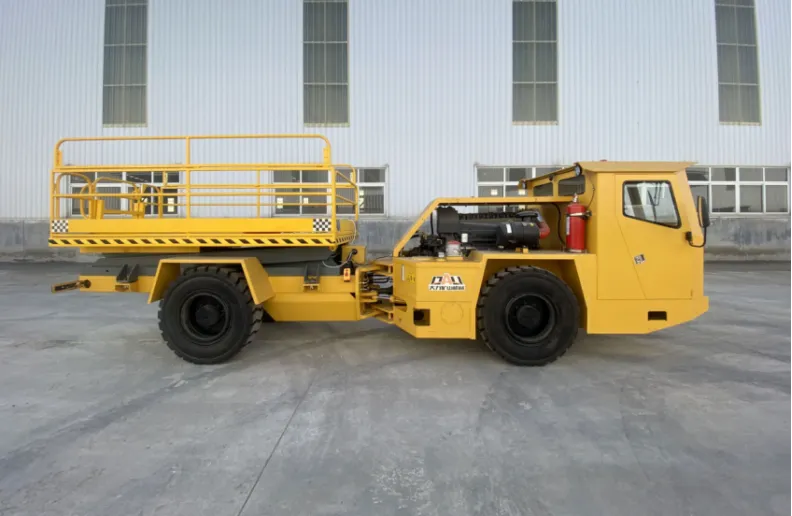
For mines that still need diesel power today, a well-built underground scissor lift should deal with the usual pain points head on. The UK-6WX does that in a fairly direct way. It uses a central articulated frame with a 40° turning angle for tighter roadways, a fully closed cab with air conditioning, low cab vibration, spring applied hydraulic release braking, a door interlock, automatic alarms, and auto lubrication.
In plain terms, that means the machine is trying to answer the exact things underground crews complain about: cramped turns, rough shifts, visibility, braking confidence, and service burden.
What Do You Actually Get from the UK-6WX?
You also get numbers that fit maintenance and utility work rather than brochure fluff. The platform lifting height is 3,500 mm. Capacity is 5,000 kg with the platform lowered and 2,500 kg when raised. The deck is 1.8 m by 3 m. The machine has four hydraulic outriggers for stability, hydraulic locks on the lifting cylinders, and a catalytic purifier with muffler to cut tunnel air and noise pollution.
For operator comfort in underground mining, those details matter more than clever wording. So does the simple fact that the cab is enclosed and built for rough, repetitive work.
Which Choice Fits Your Mine?
If your priority is cleaner air, lower noise, and a stronger path toward low emission underground equipment, an electric scissor lift for underground mining is usually the better fit. If your priority is long shifts, remote access, and minimal dependence on charging, a diesel scissor lift for underground mining still makes a lot of sense. For most buyers, the answer is not ideological. It comes down to ventilation, duty cycle, service habits, and how much compromise your site can tolerate. In other words, the best diesel vs electric scissor lift choice is the one that matches the mine you run, not the trend you hear about most.
FAQ
Q1: Is an electric scissor lift for underground mining always the better choice?
A: No. Electric is attractive when you want lower emissions, less noise, and lower long term running cost, but it still depends on runtime and charging conditions underground.
Q2: Why does underground mine ventilation cost matter so much in this decision?
A: Because underground air is already affected by diesel vehicles and blasting, and ventilation uses a lot of energy. A machine that adds more exhaust and heat can raise that burden.
Q3: Does diesel still make sense for underground mines?
A: Yes. Diesel still suits remote mines, long shifts, and harsh conditions where charging is limited and uninterrupted work matters more than lower local emissions.
Q4: What should you look for in a diesel underground scissor lift?
A: You should look for tight turning, stable braking, an enclosed cab, alarm systems, easy lubrication, safe lifting hardware, and practical platform capacity. Those are exactly the issues that affect day to day mine work.
Q5: What makes DALI relevant in this market?
A: DALI is focused on underground mine equipment, ore processing systems, training, spare parts, and EPCM work, and its published company profile points to long manufacturing experience and a wide export footprint.
About Us
Qixia Dali Mining Machinery Co., Ltd was established in 1998, located in Yantai City.
The company is mainly engaged in the design, development, production, installation and training of underground mine equipment and ore processing equipment, spare parts supply and sales.
More
Contact Us
- Xinbang Rd, Private Economy Park, Qixia, Shandong Province, China
- +86 173 5350 8179
- ytdali@ytdali.com
 +86 13553073459
+86 13553073459
+86 13553073459


