Top Underground Explosive Transport Vehicle Safety Features
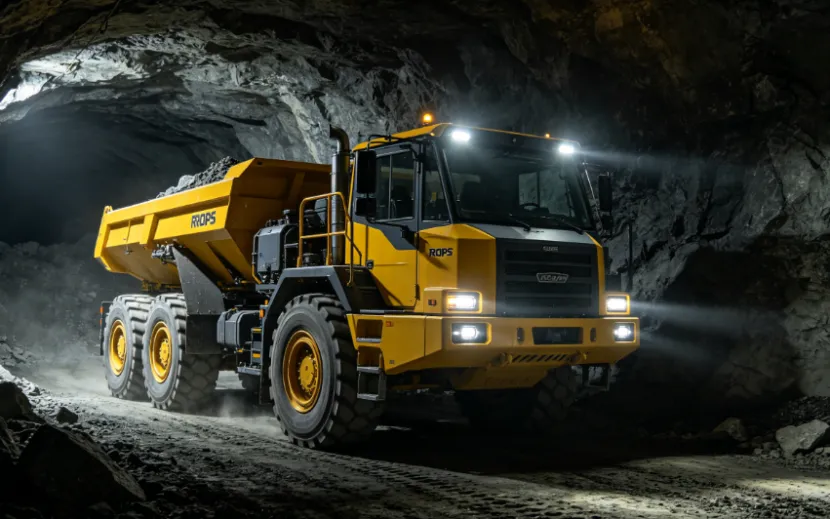
When you compare underground explosive transport vehicle safety features, the real question is simple. Which features lower the chance of fire, runaway movement, cargo shift, and blind-spot accidents in a tunnel where space is tight and mistakes get expensive fast. The current U.S. mine rule for explosive transport focuses on cargo separation, fire extinguishing, warning signs, parked-vehicle security, and non-sparking cargo spaces, so buyers usually start there before looking at comfort or speed.
A practical example helps. As a supplier, we at DALI operate as builders with real underground depth rather than just a brochure-only seller. Founded in 1998, we run a 130,000 square meter factory and employ over 200 people, including 90 technicians and engineers, exporting to more than 80 countries. Today, our machines serve over 900 mines, backed by our full EPCM services, installation, training, spare parts, and project support.
If you are buying an underground explosive transport vehicle, our background matters because safety is not just about the truck on day one. It is also about setup, support, and exactly how problems get solved underground when a shift is already running late.
Why Do Underground Explosive Transport Vehicle Safety Features Matter?
In underground haulage, payload and engine power are easy to compare. Safety is harder, and that is exactly why buyers worry about it. A vehicle can look fine on paper and still be weak where it counts most, especially in braking, visibility, fire control, and parked stability.
Fire and Cargo Control Come First
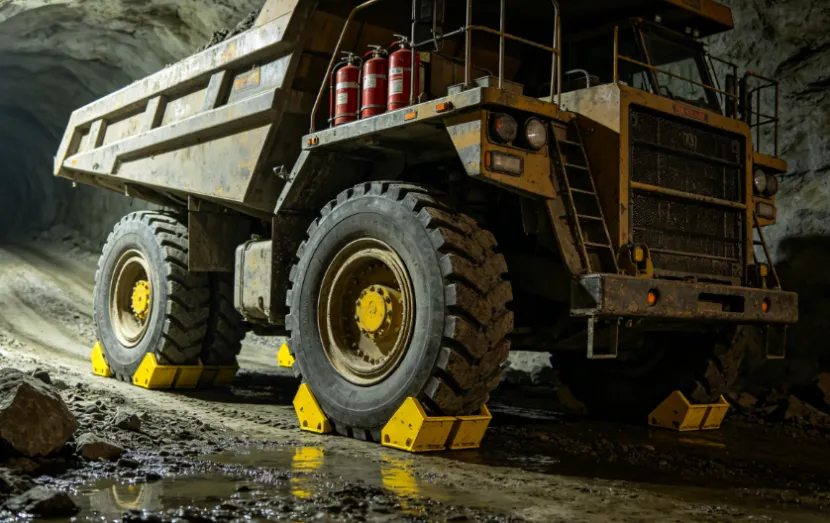
The rule set is pretty direct. Detonators must be separated from other explosives by 4 inches of hardwood or an equivalent barrier, or by a laminated partition under the stated conditions. Vehicles carrying explosive material also need a cargo space that contains the load, warning signs visible from each approach, and fire protection in the form of at least two multipurpose dry-chemical extinguishers or one extinguisher plus an automatic system.
That is the baseline for underground explosive transport vehicle compliance, not a nice extra. It also makes detonator separation in explosive transport and explosive vehicle fire protection two of the first things you should ask about.
Daily Tunnel Risks Matter Too
The UK-6ET spec shows why buyers look beyond cargo rules. The sheet lists a 5000 kg explosive tank capacity, a 40° articulated turning angle, an inner turning radius of 3830 mm, an outer turning radius of 5974 mm, and a climbing ability of 25 percent. That mix speaks to a real tunnel problem: you need a vehicle that carries useful volume but still stays controllable in narrow headings and on grades.
Which Safety Features Deserve the Closest Look?
This is where the shortlist usually gets made. The most valuable underground explosive transport vehicle safety features are the ones that keep the vehicle stable when the road is rough, the operator is reversing, or the unit is parked on a grade for loading.
SAHR Braking and Parking Control
A good explosive transport vehicle braking system should not leave you guessing when the vehicle stops, parks, or idles during loading. The UK-6ET uses SAHR braking with a multi-disc brake design, and the spec also states a braking lock once the door is open.
That is a very practical detail. People notice it after a near-miss, not before. The same regulation section also requires parked vehicles carrying explosive material to have brakes set, wheels chocked if movement could occur, and the engine shut off unless it is powering a loading device.
Fire Protection and Cargo Space Discipline
The vehicle sheet lists an optional engine fire suppression system, while the regulation requires either two dry-chemical extinguishers or one extinguisher and an automatic fire suppression system.
It also says no sparking material should be exposed in the cargo space and only properly secured non-sparking equipment should be there with the explosives. So yes, engine fire suppression system sounds like an option on paper, but in actual underground mine explosive transport safety, many buyers treat it as a must-have.
Visibility and Operator Protection
Blind spots are a daily issue underground. The UK-6ET spec includes a rear camera system, reverse alarm, flash beacon, mirrors, and a ROPS FOPS cab with air conditioning, wipers, sprinklers, and two shock-absorbing seats. A closed cab underground mining vehicle also helps cut operator fatigue on long shifts. That may sound like comfort talk, but tired drivers miss things. It happens.
What Else Should You Check Before You Buy?
Good spec sheets do not stop at the headline features. You also want to see the small details that keep the machine working after handover, because downtime underground can turn a safe plan into a rushed one.
Look for Early Warnings and Service Basics
The UK-6ET sheet lists an automatic alarm system for oil temperature, oil pressure, and the electrical system, plus auto central lubrication. It also comes with filters, oil seals, a spare tire with rim, a first aid kit, two wheel chocks, and service, maintenance, and parts manuals in English. That is useful because safety is not only about crash prevention.
It is also about catching faults before the machine forces a bad decision in the tunnel. If you want a broader look at product families, the company’s underground vehicle range and service support page are worth checking while you compare options.
In the end, the best underground explosive transport vehicle safety features are not the flashiest ones. They are the ones that keep braking predictable, control fire risk, protect the operator, and keep the explosive load stable and properly separated. That is what a serious underground explosive transport vehicle should do every shift, not just on delivery day.
FAQ
Q1: What are the most important underground explosive transport vehicle safety features?
A: Start with braking, fire protection, cargo separation, warning signs, parked security, and visibility aids such as a rear camera system. Those are the features most closely tied to accident prevention and regulatory checks.
Q2: Why is SAHR braking important in an explosive transport vehicle braking system?
A: It gives you fail-safe braking behavior that matters on grades, at stops, and during loading. The UK-6ET sheet also adds a door-open braking lock, which helps reduce unintended movement.
Q3: How does detonator separation in explosive transport affect buying decisions?
A: The rule requires separation from other explosives by 4 inches of hardwood or equivalent, or a laminated partition under the stated conditions. That means cargo layout is part of safety, not just storage planning.
Q4: Does a ROPS FOPS cab really matter if the tunnel is already controlled?
A: Yes. A ROPS FOPS cab and a closed cab underground mining vehicle help protect the operator from impact risks, poor tunnel conditions, and fatigue during long shifts.
Q5: What should you ask a supplier about underground explosive transport vehicle compliance?
A: Ask about fire extinguishing, warning signs, cargo-space materials, parked-vehicle controls, wheel chocks, and whether the machine’s cargo area supports the required explosive separation method for your site.
About Us
Qixia Dali Mining Machinery Co., Ltd was established in 1998, located in Yantai City.
The company is mainly engaged in the design, development, production, installation and training of underground mine equipment and ore processing equipment, spare parts supply and sales.
More
Contact Us
- Xinbang Rd, Private Economy Park, Qixia, Shandong Province, China
- +86 173 5350 8179
- ytdali@ytdali.com
 +86 13553073459
+86 13553073459
+86 13553073459


