Explosive Transport Vehicles: 10 Safety Features Buyers Should Check
A loaded vehicle stops on a 15-degree mine ramp. The operator opens the cab door, and the brake must hold without a second thought. That small scene says more about safety than a glossy brochure. When you compare an explosive transport vehicle, check how its systems behave during a fault, a blind reverse, a fire, or a rushed shift change.
An underground explosive transport vehicle also has to fit the mine. Capacity, turning radius, grade ability, ventilation rules, and local certification all matter.
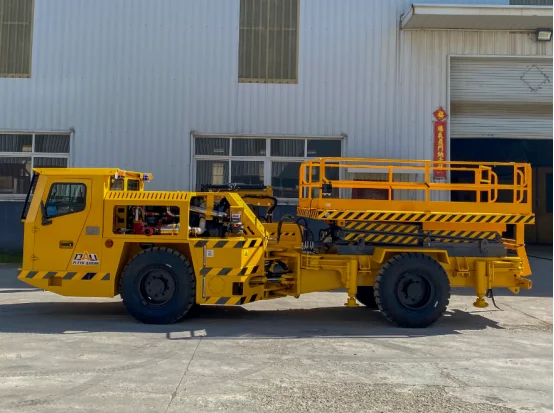
What Makes an Explosive Transport Vehicle Safe Underground?
Good protection comes from several systems working together. The following explosive transport vehicle safety features cover vehicle control, operator protection, cargo isolation, and upkeep. Ask the supplier to show each item in a technical sheet or functional test. A label on a brochure is not enough.
1. SAHR Brake
A SAHR brake is spring applied and hydraulically released. Spring force applies the brake if hydraulic release pressure is lost, which gives you a fail-safe response. One documented configuration uses enclosed multi-disc brakes plus separate parking, service, and emergency braking functions. Ask for brake test results at rated load and on your mine’s steepest operating grade.
2. Door Brake Interlock
A door brake interlock applies or locks braking when the cab door opens. It helps prevent roll-away incidents during entry or exit. Test the interlock during acceptance. Check what happens if the door switch fails and whether staff can diagnose the fault without bypassing it.
3. Rear Camera System
An articulated carrier has a large rear blind area. A rear camera system gives the operator a direct view near the cargo body, while mirrors cover the sides. Check the screen in low light, dust, and vibration. The lens should stay useful when the vehicle is loaded.
4. Engine Fire Suppression System
An engine fire suppression system can control a fire before heat reaches the explosive load. Verify whether it is standard or optional. Ask about detection points, manual activation, agent type, discharge coverage, inspection intervals, and refill support. A cylinder on the machine is only part of the system.
5. Automatic Warning System
An automatic warning system should alert the operator to abnormal oil temperature, low oil pressure, and electrical faults. A flash beacon, reverse alarm, horn, turning lights, and working lights warn nearby crews as well. During a noisy shift underground, a dashboard icon alone is easy to miss. Ask for both visual and audible alarm logic.
6. ROPS/FOPS Cab
A closed ROPS/FOPS cab protects the operator during a rollover or falling-object event when tested to the stated standard. Wipers, mirrors, a seat belt, air conditioning, and shock-absorbing seats also matter because visibility and fatigue affect driving. Request the test certificate, not just the acronym.
7. Protected Cargo Compartment
An explosion-proof vehicle for explosives needs a cargo compartment that separates the load from ignition sources and limits movement. Check the lining, restraint points, doors, locks, fire resistance, and arrangements for keeping detonators apart where regulations require it. General buying guidance also calls for non-sparking contact materials and shock control. Match every detail to the explosives you carry and the law at the mine site.
8. Stable Frame and Mine-Ready Geometry
Look beyond steel thickness. A high-strength articulated frame should distribute the load evenly, and an articulation lock should prevent unintended frame folding during service. Compare ground clearance, approach angle, axle oscillation, grade ability, and inner and outer turning radii with a route survey. One 5,000 kg-capacity layout is 1,850 mm wide and uses a 40-degree articulation angle, useful numbers for an early fit check.
9. Ignition and Exhaust Controls
Electrical equipment, engine surfaces, and exhaust can become ignition sources. Ask which components are sealed or spark controlled, how surface temperature is limited, and which certification covers the complete vehicle. A catalytic purifier and muffler can cut exhaust pollution and noise in the tunnel, but they do not replace formal explosion-protection approval. Review the applicable certification and operating principles for your region.
10. Emergency and Maintenance Readiness
Daily care keeps safety hardware available. Useful provisions include automatic central lubrication, towing lugs, wheel chocks, a first-aid kit, common spares, and English service, maintenance, and parts manuals. Check access to inspection points. Awkward checks tend to get postponed.
What Should You Verify before Purchase?
Start with the route and the load. Give the explosive transport vehicle manufacturer your drift width, tightest bend, maximum gradient, altitude, ambient temperature, ventilation limits, explosive type, and required payload. Then ask for a compliance matrix that answers each point.
Your acceptance file should include the explosive transport vehicle technical specification, certificates valid in the destination market, brake and interlock tests, fire-system details, cargo-compartment drawings, manuals, spare-parts list, and operator training scope. Compare lifetime support as well as the explosive transport vehicle price. Downtime caused by an unavailable brake valve or fire-system refill can quickly erase a low purchase price.
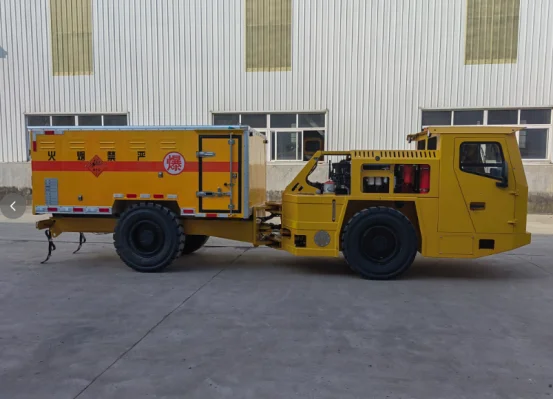
Match the Vehicle to Your Mine before You Buy
Once the safety checklist is clear, the next question is whether the explosive transport vehicle supplier can turn mine data into a buildable configuration. DALI designs and produces underground mine equipment and provides installation, training, spare-parts support, and mine-project engineering services. Its utility-vehicle work includes mine-specific chassis applications, while the documented explosive carrier combines SAHR braking, a door brake lock, rear visibility, warning devices, an optional fire-suppression system, and a ROPS/FOPS cab.
That combination is relevant because buyers need one accountable technical package, not ten disconnected accessories. Send the route survey, payload, local approval requirements, and preferred options when you Request Technical Specification or Get a Quote. The reply should state what is standard, what is optional, and what needs engineering review.
FAQ
Q1: What Is an Explosive Transport Vehicle?
A: It is a purpose-built vehicle for carrying explosives through mines, tunnels, quarries, or other controlled sites. Its design manages ignition sources, cargo movement, braking, visibility, and emergency response.
Q2: Is a SAHR Brake Fail-Safe?
A: It applies braking through spring force when hydraulic release pressure is lost. You should still verify rated-load stopping and holding tests for the actual vehicle.
Q3: Should Fire Suppression Be Standard?
A: Mine rules and risk assessments differ. If the system is optional, specify it before quotation and confirm detection, discharge coverage, servicing, and refill availability.
Q4: Which Certification Does the Vehicle Need?
A: The destination country, mine type, and hazardous-zone classification set the requirement. Ask the supplier to name the exact standard and provide a valid certificate for the complete configuration.
Q5: What Information Is Needed for a Quote?
A: Provide payload, explosive type, tunnel profile, gradients, turning limits, altitude, temperature range, local certification, safety options, training needs, and spare-parts expectations.
About Us
Qixia Dali Mining Machinery Co., Ltd was established in 1998, located in Yantai City.
The company is mainly engaged in the design, development, production, installation and training of underground mine equipment and ore processing equipment, spare parts supply and sales.
More
Contact Us
- Xinbang Rd, Private Economy Park, Qixia, Shandong Province, China
- +86 173 5350 8179
- ytdali@ytdali.com
 +86 13553073459
+86 13553073459
+86 13553073459


