Underground Mining Utility Vehicles: Choosing Explosives Transport
Choosing an underground mining utility vehicle is rarely just about payload or engine power. Tunnel width, ramp grade, turning space, braking, visibility, and the type of cargo all matter. When explosives are involved, those details matter even more.
General underground mining utility vehicles can handle personnel, tools, materials, and service work. An underground mining utility vehicle for explosives transport, however, needs closer scrutiny. A standard underground utility vehicle may fit the tunnel, yet still lack the cargo configuration or safety features you need from an explosive transport vehicle.
The practical question is simple: will the machine fit your mine, carry the required load, and stay controllable through the whole route?
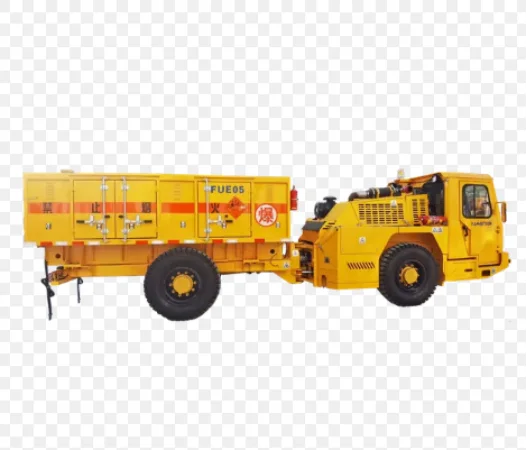
What Is an Underground Mining Utility Vehicle?
An underground mining utility vehicle is a support machine used for transport and service work below ground. Depending on its configuration, a mining utility vehicle may move people, materials, fuel, tools, maintenance equipment, or specialized cargo. An underground mine utility vehicle is usually designed around restricted space, rough roads, ramps, frequent turning, and demanding shift work.
That makes these machines different from general surface vehicles. When comparing underground mining vehicles or other underground mining transport equipment, you need to start with the job, not the catalog.
How to Choose an Underground Mining Utility Vehicle for Explosives Transport?
If you are asking how to choose an underground mining utility vehicle, begin with your actual underground route. Payload matters, but it is only one part of the decision. Mining utility vehicle specifications should be checked against tunnel geometry, gradient, operating distance, braking needs, and your explosives transport requirements.
Check Payload and Vehicle Dimensions
Start with mining vehicle payload capacity. A larger load can reduce transport trips, but a larger machine may also become difficult to use in narrow headings.
For example, the UK-6ET has a listed explosive tank capacity of 5,000 kg. If you are comparing a 5 ton explosive transport vehicle, that capacity gives you a useful reference point. Still, the required underground mining vehicle payload should reflect how much material you actually move per trip and per shift.
Next, check underground mining vehicle dimensions. The UK-6ET measures 7,500 mm long, 1,850 mm wide, and 2,160 mm high, with 270 mm minimum ground clearance.
Width alone does not tell the whole story. A 1.85 m wide machine can still be the wrong choice if a tight intersection gives it nowhere to swing. That problem tends to appear late, and late is expensive.
Compare Turning Radius and Gradeability
Underground mining vehicle turning radius becomes critical at narrow intersections, loading points, and workshop entrances. The UK-6ET uses an articulated frame with a 40° turning angle. Its listed inner turning radius is 3,830 mm and outer turning radius is 5,974 mm.
These figures help you judge underground mining vehicle maneuverability against your actual mine layout rather than guessing from overall width.
Ramp conditions deserve the same attention. Underground mining vehicle gradeability should be compared with the steepest part of your working route. The UK-6ET lists a climbing ability of 25%, or 15°. If the vehicle regularly carries a full load on ramps, route length and downhill travel also deserve a closer look.
Put Braking and Safety High on the List
An underground mining vehicle braking system works in a tough setting. Loads are heavy, roads may be dusty or wet, stopping space is short, and ramps leave little room for error.
The UK-6ET uses multi-disc SAHR braking, meaning spring applied, hydraulic release. Its specification also combines parking, working, and emergency braking functions and includes braking lock when the door is opened.
Those are practical underground mining vehicle safety features, not brochure decoration. The vehicle also has a rear camera, reverse alarm, flash beacon, and automatic warnings for oil temperature, oil pressure, and the electrical system. An engine fire suppression system is available as an option.
If braking is a major purchasing concern, it is worth reviewing how an underground mining vehicle braking system behaves when hydraulic pressure drops and how its safety devices work together.
Look Beyond Purchase Price to Maintenance
Underground mining vehicle maintenance directly affects availability underground. A machine waiting for routine servicing or basic parts is not moving explosives.
The UK-6ET includes an automatic central lubrication system and automatic fault warnings. Its listed support package includes filters, oil seals, a spare tire with rim, a toolbox, and English service, maintenance, and parts manuals.
Small details like these often matter after the first few months of operation. A specification sheet can look excellent on day one. Maintenance access and parts support decide how pleasant that purchase feels later.
Why Does Explosives Transport Need a More Specialized Vehicle?
An explosives transport vehicle has a narrower job than a general service machine. You need to consider cargo capacity, stable braking, visibility, maneuverability, and protection systems together.
The terms underground explosive transport vehicle and underground explosives transport vehicle may look similar to ordinary utility vehicle searches, but the buying intent is different. In mining explosives transport, the question is not simply whether the vehicle can carry 5,000 kg. You also need to know how it behaves on your ramps, through your turns, and during frequent stops.
A purpose-built explosive transport vehicle should therefore be evaluated as a complete working system. Local mine rules and explosives transport requirements must also be checked before final configuration.
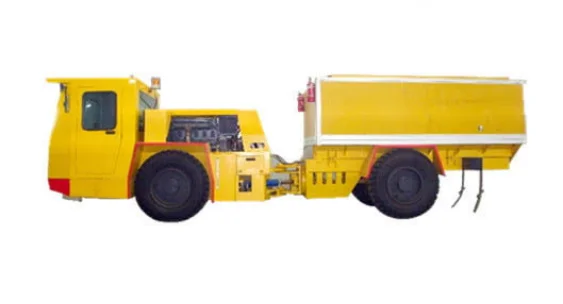
What Should You Send Before Requesting a Quote?
A supplier can give you a much more useful answer when the request contains real operating data. Before asking for pricing, collect your minimum tunnel width and height, maximum gradient, tightest turning area, required load per trip, transport distance, trips per shift, ambient temperature, and working altitude.
Also state any required fire protection, cab, warning, or other safety configuration. This is far better than simply asking for “one underground utility vehicle price.” If needed, you can send these conditions through the technical inquiry page.
Matching the Vehicle to Real Underground Work
Once your route, payload, and safety needs are clear, supplier capability becomes part of the selection process. A useful supplier should be able to discuss the complete vehicle rather than leave you to compare isolated numbers.
DALI works across the design, development, production, installation, training, and spare parts support of underground mine equipment. Its underground vehicle range also covers several types of mine transport and service equipment, which is relevant when a site has different support duties.
For explosives transport, the UK-6ET brings together a 5,000 kg tank capacity, articulated steering, 1,850 mm body width, SAHR braking, rear visibility equipment, automatic alarms, centralized lubrication, and optional fire suppression. These features give you concrete points to compare against your own tunnel and operating conditions, rather than choosing from a payload figure alone.
FAQ
Q1: What Is an Underground Mining Utility Vehicle?
An underground mining utility vehicle provides crucial underground support. It hauls crew, materials, and specialized cargo. Its dimensions, agility, and brakes must match your specific site.
Q2: Can a Standard Underground Utility Vehicle Carry Explosives?
This depends on machine setup, site conditions, and local laws. A dedicated explosives transport vehicle usually works better. Hazardous hauling demands tailored cargo holds, stronger brakes, and stricter protection.
Q3: What Mining Utility Vehicle Specifications Matter Most?
Check payload capacity first. Next, review underground mining vehicle dimensions, turning radius, and gradeability. Always cross-check these metrics against your exact tunnel layouts.
Q4: What Underground Mining Vehicle Safety Features Should You Check?
Vital underground mining vehicle safety elements include secure brakes and door interlocks. Also verify rear visibility, warning alarms, operator shielding, and fire suppression.
Q5: How Do You Choose an Underground Explosive Transport Vehicle?
Align the underground explosive transport vehicle with your required payload and tunnel clearances. Evaluate turning spaces and maximum inclines. The right choice integrates seamlessly into your entire operation.
About Us
Qixia Dali Mining Machinery Co., Ltd was established in 1998, located in Yantai City.
The company is mainly engaged in the design, development, production, installation and training of underground mine equipment and ore processing equipment, spare parts supply and sales.
More
Contact Us
- Xinbang Rd, Private Economy Park, Qixia, Shandong Province, China
- +86 173 5350 8179
- ytdali@ytdali.com
 +86 13553073459
+86 13553073459
+86 13553073459


