Underground Concrete Mixer Truck: Specs & Buying Guide
Why Do Underground Mines Need a Specialized Concrete Mixer Truck?
Concrete transport below ground is different from road delivery. You deal with narrow tunnels, sharp turns, steep ramps, limited ventilation, uneven surfaces, and strict time windows. A standard road mixer may carry concrete well, but its size and turning needs can slow the entire work cycle.
An underground concrete mixer truck is built around these conditions. Its layout, steering, braking, drum system, and discharge arrangement support concrete delivery in underground mines. You can move concrete from a mixing station to a shotcrete area, lining section, shaft project, or underground construction site with fewer transfers.
That matters because every extra transfer takes time. It can also increase segregation, spillage, and material waste. In a busy mine, a small delay repeated throughout a shift quickly becomes a production problem.
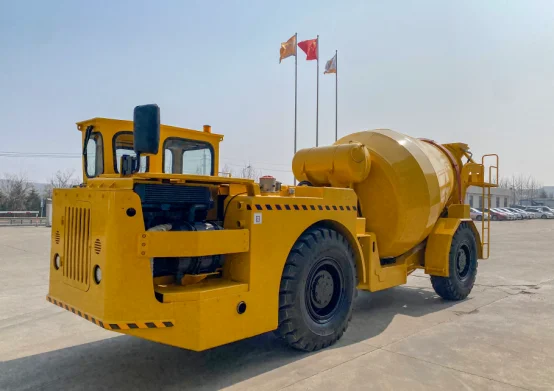
What Is an Underground Concrete Mixer Truck?
An underground concrete mixer truck combines concrete transport and continuous mixing in one machine. It carries fresh concrete through underground workings while the drum keeps the mix moving. At the work face, you can discharge the material without relying on several separate haulage steps.
How It Differs from a Surface Mixer
A surface mixer normally has more room to operate. Underground equipment must fit the mine’s actual geometry. Before choosing a vehicle, you should check:
-
Tunnel height and width
-
Ramp gradient
-
Turning radius
-
Road surface condition
-
Loading and discharge space
-
Ventilation limits
-
Required travel distance
A low-profile concrete mixer truck can be useful when the clearance is restricted. Still, the published dimensions must match your site measurements. A difference of only a few centimeters may affect access in older workings.
Typical Applications
You can use an underground concrete mixer truck for:
-
Underground mine construction
-
Tunnel lining and repair
-
Concrete floor and roadway work
-
Shaft and chamber construction
-
Hydropower and infrastructure tunnels
-
Underground support and reinforcement projects
The right application depends on concrete demand, haul distance, road conditions, and the available loading system.
Which Technical Specifications Matter Most?
Technical specifications tell you whether a vehicle fits your operation. Do not compare capacity alone. A truck with a larger drum may look attractive, yet it may not suit your tunnel clearance or turning space.
Mixing Capacity and Drum Design
The rated mixing capacity affects how much concrete you can deliver per cycle. You should compare that figure with the average pour size and the distance between the mixing station and work area.
Drum rotation, blade design, and discharge control also affect mix quality. The drum should keep the concrete workable during travel without creating unnecessary delays at the discharge point. The exact capacity and drum data should come from the current product specification sheet.
Dimensions and Maneuverability
Overall height, width, wheelbase, and minimum turning radius are key figures for underground work. Check them against the narrowest section of your route, not the average tunnel size.
Good maneuverability helps you approach bends, loading bays, and working faces with fewer reversing movements. This can make the operator’s job easier, especially when visibility is poor or the road is wet.
Engine, Drive, and Gradeability
The engine and drive system must match the mine’s ramps and road conditions. You should review rated power, drive configuration, maximum speed, gradeability, and low-speed control.
Traction matters more than top speed in many underground routes. A controlled vehicle that climbs steadily can support a safer and more predictable concrete delivery cycle than a faster vehicle with weak low-speed response.
Braking and Safety Equipment
Review the service brake, parking brake, emergency braking arrangement, lighting, warning devices, and fire protection options. These items deserve the same attention as the drum capacity.
Ask how the braking system performs on long descents. Also check access to inspection points and replacement parts. Maintenance is easier when technicians can reach the system without removing half the vehicle.
How Does the UCM-410 Support Concrete Delivery?
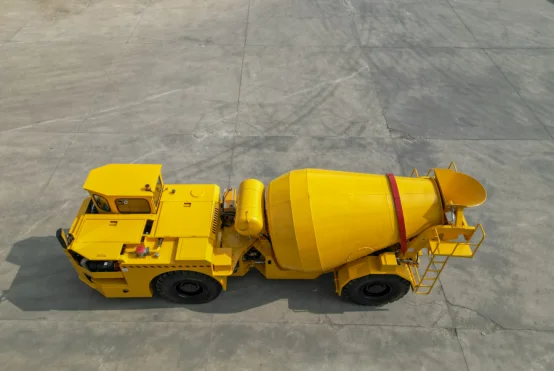
The UCM-410 model is intended for underground concrete transport and mixing work. Its value depends on how well its configuration matches your mine. You should compare the listed dimensions, capacity, power system, discharge arrangement, and safety features with your site data before placing an order.
A normal operating cycle may look like this:
Fresh concrete is loaded at the mixing station.
The drum continues mixing during transport.
The vehicle travels through ramps and tunnels to the work area.
Concrete is discharged close to the pour or support point.
The truck returns for the next cycle.
You can estimate daily output by reviewing loading time, travel distance, discharge time, and return time. The number of cycles per shift is often more useful than the nominal drum capacity by itself.
How Can You Choose the Right Underground Concrete Mixer Truck?
A practical selection process starts with the site, not the brochure. Measure the route first, then match the vehicle to the work schedule.
Check the Underground Route
Record the tightest tunnel section, lowest roof point, steepest ramp, and sharpest bend. Include temporary supports, ventilation ducts, cables, and other equipment. These are easy to overlook during an office-based review.
Match Capacity to the Work Cycle
Estimate how much concrete you need at each work face. A smaller truck may work better where access is difficult. A larger truck may reduce the number of trips where the route is open and the pour is continuous.
You should also consider the concrete supply rate. If the mixing station cannot keep the truck loaded, extra capacity will not improve the shift output.
Review Service and Spare Parts
Ask about routine maintenance, wear parts, technical training, and response time. A concrete mixer truck for mines works in abrasive conditions. Drum components, hydraulic parts, tires, filters, and braking components need a clear replacement plan.
What Should You Look for in a Long-Term Equipment Supplier?
Once the basic specifications fit, supplier capability becomes part of the purchase decision. Underground equipment stays in service for years, so technical support matters beyond the initial delivery.
DALI presents itself as a manufacturer focused on underground mining machinery and related construction equipment. Its product range covers underground haulage, loading, utility, and concrete equipment. For a buyer, the useful point is the breadth of that product focus. You can discuss the mixer within the wider mine transport system instead of treating it as an isolated road vehicle.
The company also provides equipment information for different underground applications and supports communication around configuration and service needs. When you review underground mining equipment, compare the published data with your tunnel measurements and operating cycle. That conversation usually produces a more realistic specification than choosing by capacity alone.
How Do You Maintain an Underground Concrete Mixer Truck?
Daily checks should cover the engine, brakes, tires, lights, hydraulic lines, steering, and drum system. Remove concrete residue before it hardens. Hardened material adds weight, reduces usable drum volume, and makes later cleaning more difficult.
Inspect discharge components after each shift. Check lubrication points at the recommended intervals. Keep a simple record of faults, repairs, and operating hours. Small leaks or unusual drum noise often appear before a larger failure.
Operators should also receive training on ramp driving, reversing, emergency braking, and safe discharge procedures. The exact maintenance interval should follow the equipment manual and the mine’s safety rules.
FAQ
Q1: What is an underground concrete mixer truck used for?
A: It transports and mixes fresh concrete between an underground mixing station and the work face, reducing the need for repeated transfers.
Q2: What should you check before buying an underground concrete mixer truck?
A: Check tunnel clearance, width, turning radius, ramp gradient, concrete demand, travel distance, braking performance, and service support.
Q3: Can a low-profile concrete mixer truck work in narrow tunnels?
A: It can, provided its actual height, width, and turning radius match the narrowest sections of your route.
Q4: How do you maintain an underground mixer truck?
A: Inspect the drive, brakes, steering, hydraulics, tires, and drum each day. Clean leftover concrete promptly and follow the recommended service schedule.
Q5: Where can you request technical information?
A: You can review the available concrete mixer truck solutions and contact the supplier for current specifications, configuration details, and technical support.
About Us
Qixia Dali Mining Machinery Co., Ltd was established in 1998, located in Yantai City.
The company is mainly engaged in the design, development, production, installation and training of underground mine equipment and ore processing equipment, spare parts supply and sales.
More

Contact Us
- Xinbang Rd, Private Economy Park, Qixia, Shandong Province, China
- +86 173 5350 8179
- ytdali@ytdali.com
 +86 13553073459
+86 13553073459
+86 13553073459


