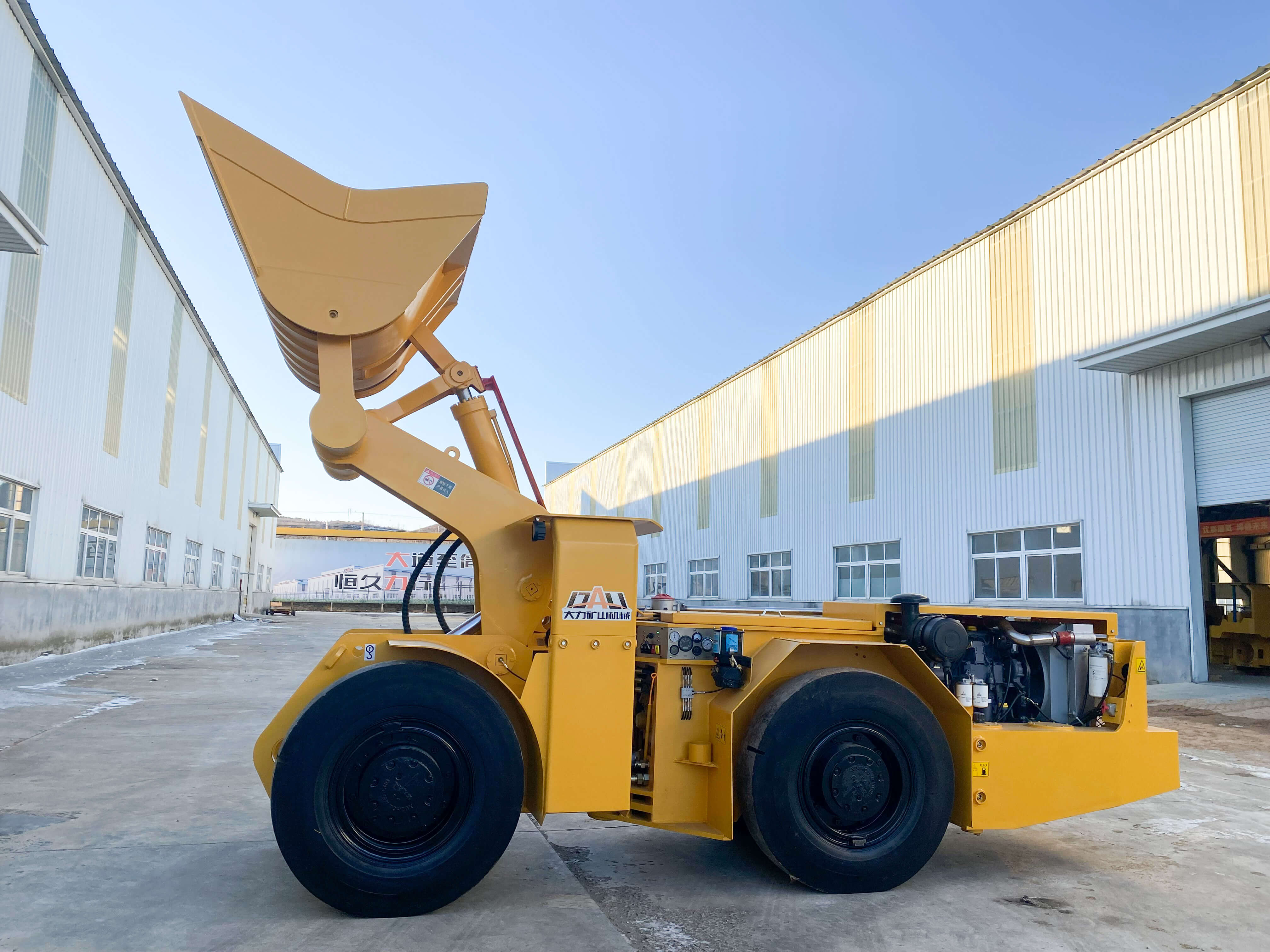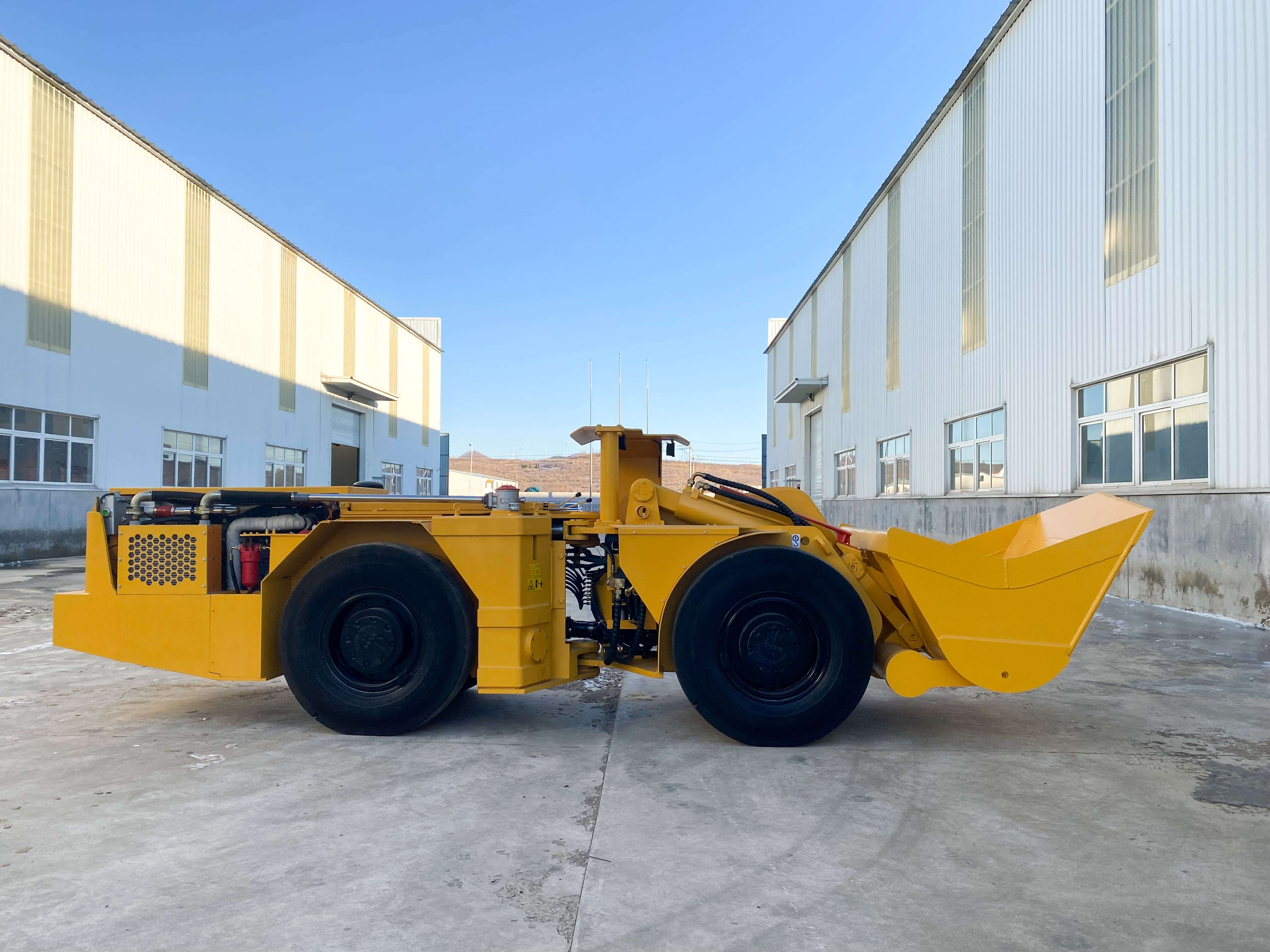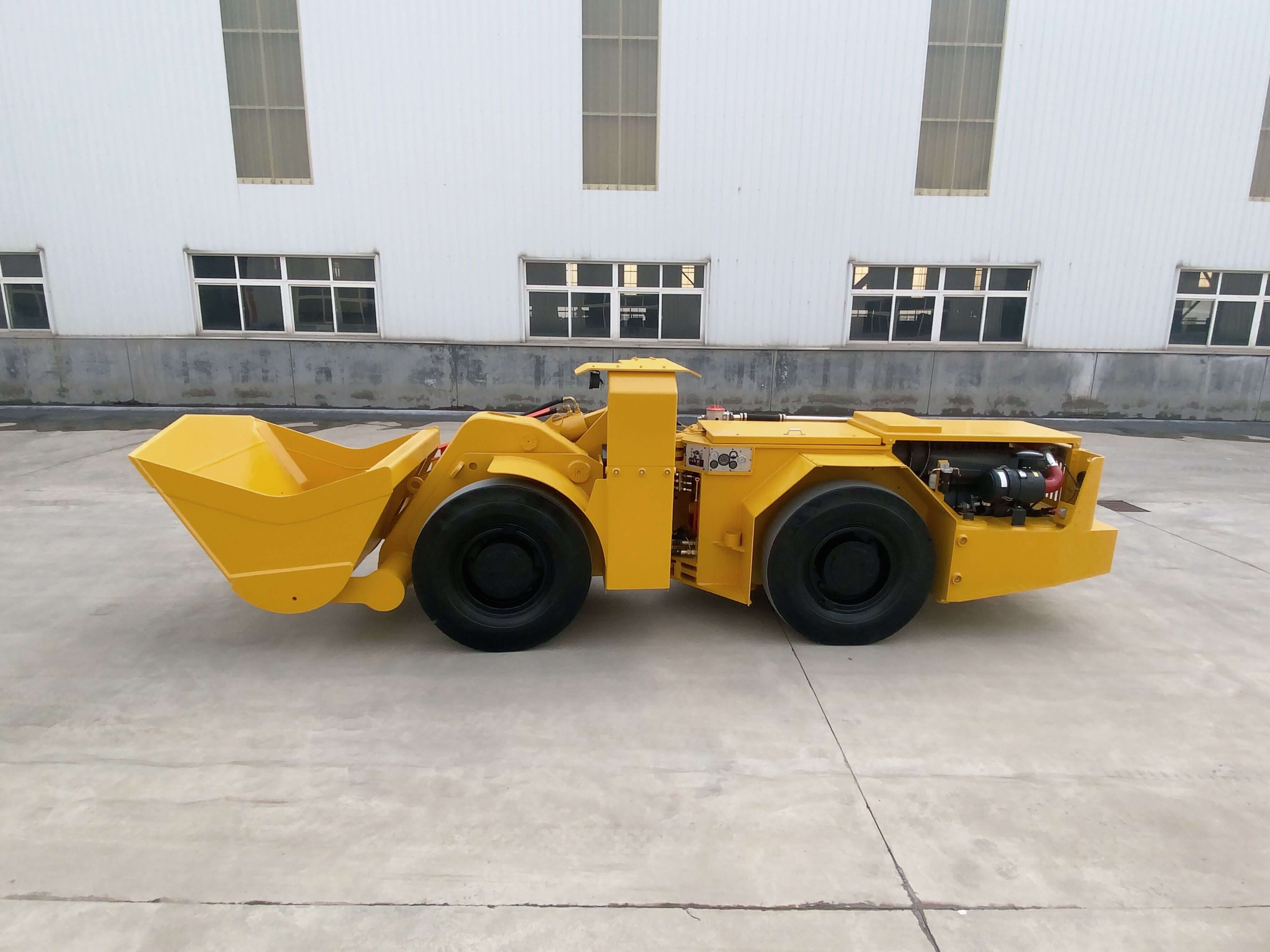
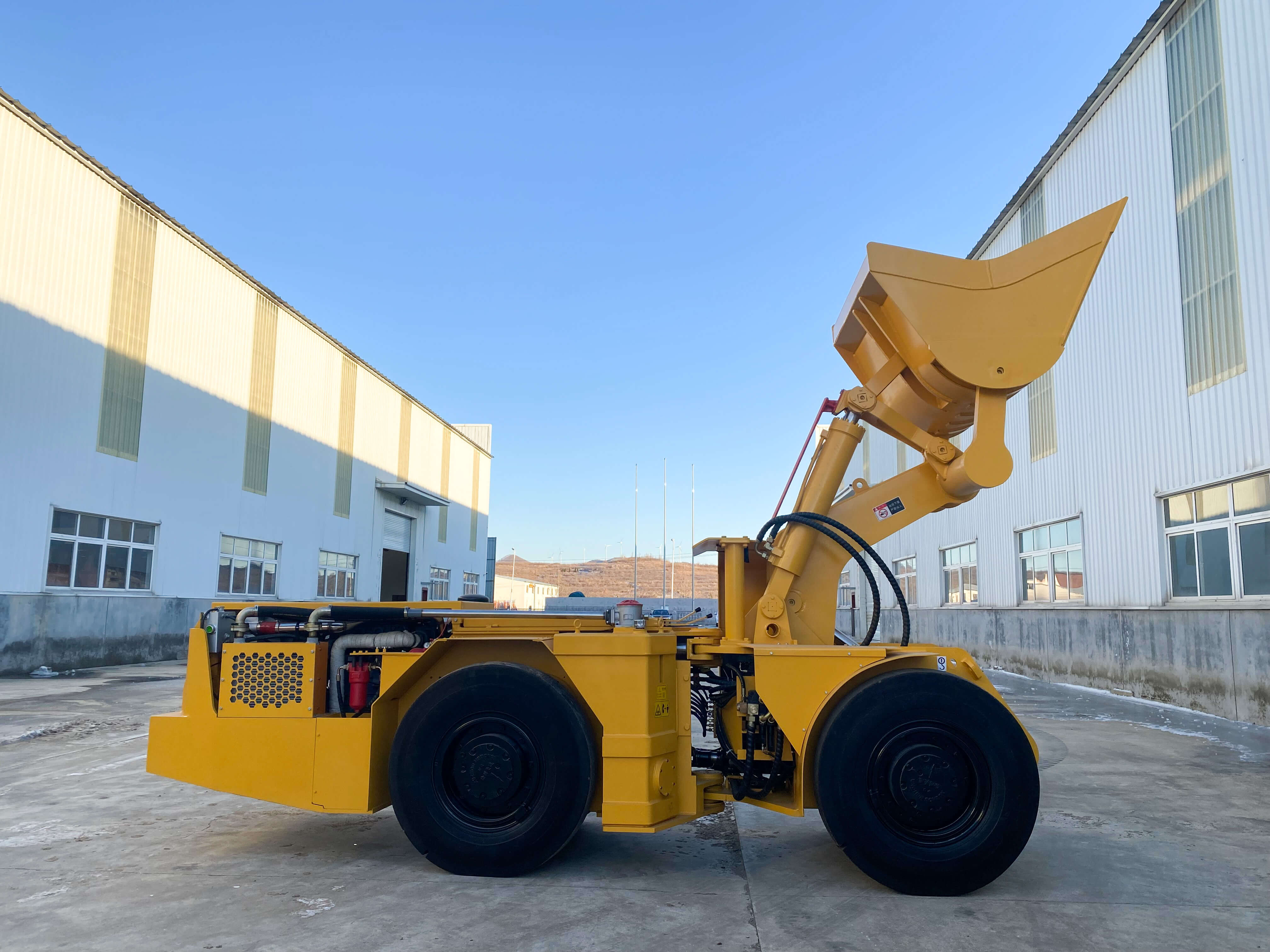
The DALI WJ-2 is a 4-ton diesel underground LHD loader for mines seeking more tonnes per loading cycle without moving to a large production machine. Its published configuration combines a 2.0 m³ bucket, 1,800 mm body width, 1,740 mm unloading height and 83 kW Deutz engine. Remote control is listed as available.
|
Selection Item |
Published Value |
|
Rated payload |
4,000 kg |
|
Standard bucket |
2.0 m³ |
|
Overall dimensions (L x W x H) |
7,000 x 1,800 x 2,080 mm |
|
Maximum breakout force |
85 kN |
|
Maximum traction |
104 kN |
|
Engine |
Deutz F6L914, 83 kW at 2,300 rpm |
 Chat With Us
 Leave Message
The WJ-2 is the capacity-led option in DALI’s compact diesel LHD range. A 4,000 kg rated payload and 2.0 m³ bucket can reduce the number of trips needed for a fixed tonnage compared with a 3-ton loader, provided the complete route can accept the machine and the receiving point matches its dumping geometry.
Its published 1,800 mm width remains relevant to restricted mines, but the WJ-2 is longer and heavier than the WJ-1.5. The selection decision should therefore be based on whether the extra tonne of rated payload offsets the access, road-maintenance and fleet-interface demands of the larger machine.
The rated 4,000 kg payload is one-third higher than the WJ-1.5’s published 3,000 kg rating. That advantage is useful only when the drawpoint can fill the bucket effectively and the downstream ore pass or truck can receive the material without creating a new bottleneck.
Published dimensions are 7,000 x 1,800 x 2,080 mm. The width is only 40 mm greater than the WJ-1.5 figure, but overall length increases by 351 mm and operating weight by 2,500 kg. Corners, road bearing condition and recovery capacity therefore deserve separate checks.
The page publishes 85 kN breakout force, 104 kN traction and speed up to 17.4 km/h. For production planning, estimate complete cycle time from loading, travel, queuing, discharge and return rather than using maximum speed as the productivity figure.
The listed powertrain uses a Deutz F6L914 rated at 83 kW, DANA C270 torque converter, RT32000 gearbox and CMG CY-2J rigid planetary axles. Ask the technical offer to confirm that these components match the ordered engine and destination-market emission package.
The articulated frame has a published 40° steering angle and ±8° axle oscillation. Because the WJ-2 carries a published laden weight of 17,500 kg, route approval should include loaded cornering, ramp restart and stopping checks rather than a static width comparison alone.
The page describes a side-seated operator position and warning functions for oil temperature, oil pressure and electrical conditions. Confirm whether the quoted machine has an open canopy or enclosed cab, since the current page uses both descriptions.
For repeated drawpoint loading, the optional remote-control system should be reviewed as part of the complete operating method. Specify line-of-sight rules, exclusion zones, machine shutdown behavior and the functions available from the remote station.
Confirm that the mine can use the additional payload before choosing the WJ-2:
The current page provides no turning radius. Request a swept-path drawing and confirm the dumping reach before treating the 1,800 mm width as proof that the loader fits.
Published safety-related features include four-wheel braking, a SAHR parking-brake arrangement and drivetrain warning alarms. With a 4-ton payload, brake and tire selection should be reviewed against the actual ramp, road surface and loaded travel duty.
Before production use, test loaded stopping, parking on grade, steering response and safe discharge at the mine’s operating points. Maintenance planning should account for the RT32000 drivetrain, articulation joint, bucket linkage and wear exposure created by the expected tonnes per shift.
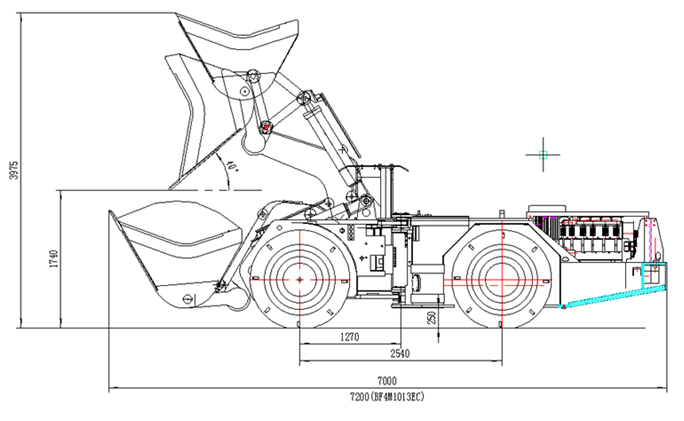
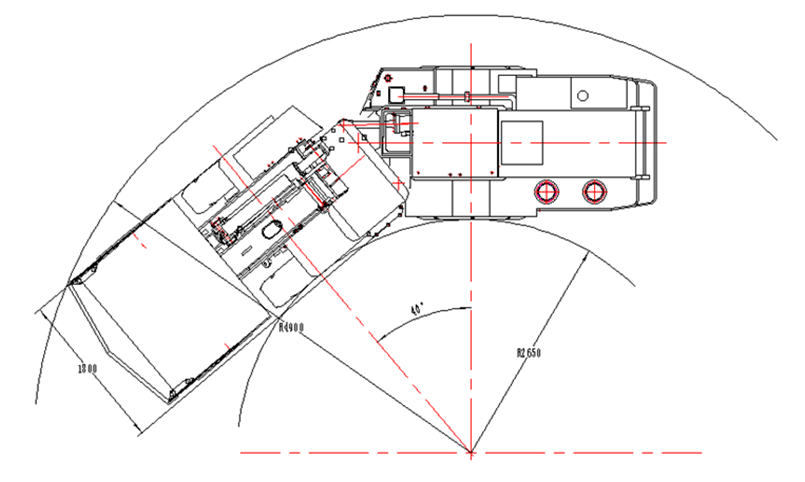
|
Parameter |
Specification |
|
Rated payload |
4,000 kg |
|
Standard bucket |
2.0 m³ |
|
Maximum breakout force |
85 kN |
|
Maximum traction |
104 kN |
|
Published laden gradeability |
20°; confirm test conditions |
|
Maximum published speed |
17.4 km/h |
|
Boom raising time |
≤6.3 s |
|
Boom lowering time |
≤3.6 s |
|
Dumping time |
≤4.0 s |
|
Parameter |
Specification |
|
Overall dimensions (L x W x H) |
7,000 x 1,800 x 2,080 mm |
|
Minimum ground clearance |
250 mm |
|
Maximum lift height |
3,975 mm |
|
Maximum unloading height |
1,740 mm |
|
Steering angle |
40° articulation |
|
Axle oscillation |
±8° |
|
Turning radius |
Not published on current page |
|
Parameter |
Specification |
|
Operating weight |
13,500 kg |
|
Laden weight |
17,500 kg |
|
Empty front axle load |
5,100 kg |
|
Empty rear axle load |
8,400 kg |
|
Loaded front axle load |
9,600 kg |
|
Loaded rear axle load |
Not published on current page |
|
Parameter |
Specification |
|
Published standard engine |
Deutz F6L914 |
|
Engine type |
Air cooled, inline 6 |
|
Rated power |
83 kW at 2,300 rpm |
|
Published alternative engine |
Deutz BF4M1013EC; configuration requires confirmation |
|
Published emission level |
Euro II / Tier 2; confirm destination suitability |
|
Exhaust aftertreatment |
ECS catalytic purifier with silencer, as published |
|
Torque converter |
DANA C270 |
|
Gearbox |
RT32000 |
|
Axle brand / model |
CMG CY-2J |
|
Axle type |
Rigid planetary axle |
Confirm the final bill of materials and standard-versus-optional status in the quotation.
The WJ-2 is suited to duties where a 4,000 kg cycle can be filled consistently and the 1,800 mm-wide machine can travel between the drawpoint and receiving station without restricting traffic or clearance.
The page lists a 2.0 m³ bucket and 4,000 kg payload. At the rated payload, the implied average loose density is 2,000 kg/m³ before allowing for fill factor, so actual ore density and fragmentation must be checked.
Potentially, but truck side height, bucket reach, approach angle and the WJ-2’s published 1,740 mm unloading height must be checked together. Request a loading-interface drawing rather than relying on capacity alone.
The page identifies a Deutz F6L914 rated at 83 kW as the standard engine and mentions BF4M1013EC as an option. Confirm the exact engine, cooling system, emission level and regional availability in writing.
No. The published 17.4 km/h figure does not include loading, queuing, turning, dumping or road restrictions. Use a route-based cycle calculation for production planning.
Send the target tonnes per shift, loose material density, average one-way haul, ramp profile, road condition, drawpoint layout, receiving-station dimensions, traffic restrictions and required engine or control options.