Fuel Efficiency Tips for Underground Mining Trucks
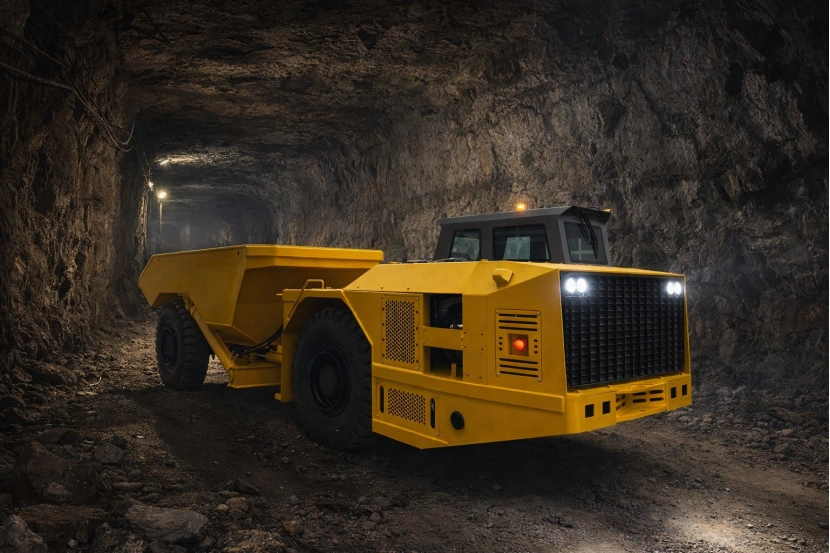
Fuel costs can slowly eat up a big part of budgets in underground mining. When operations go deep, routes stay narrow, and trucks keep running without stop, even small wastes in fuel use can grow into huge costs. That’s why paying attention to fuel efficiency in underground mining trucks isn’t just wise—it’s a must.
Importance of Fuel Efficiency in Underground Mining Operations
Economic Impact of Fuel Consumption
Diesel fuel ranks as one of the top three running costs in most underground mining operations. The up and down nature of global fuel prices can make planning budgets tricky. When trucks like the Dali UK-20, a 20 ton payload underground dumper, shift tons of ore each day, every liter saved matters a lot.
Improving truck fuel use leads right to cost cuts over time. With good systems and clever operation, even small gains in kilometers per liter build up. The tough UK-20 moves fast to haul materials up the ramp quickly—a feature that eases engine stress and saves fuel.
Environmental Considerations
Besides money matters, cutting fuel use also lowers carbon emissions—a key need in our world that cares about climate. Underground mines face more push from rules and partners to show they care about the environment. Switching to fuel-saving trucks helps with that goal.
Trucks with better engine setups or low-emission tech let companies hit green targets without losing output. The UK-20 runs on a diesel engine VOLVO TAD853VE with emission norms EU III, US T3. And so, it meets world standards for underground work.
Maintenance Strategies to Enhance Fuel Efficiency
Regular Engine and Component Inspections
Engines that work under heavy loads and hot conditions often lose some power. Checking their state is key for fuel savings.
-
Swap out dirty air filters often to keep good airflow.
-
Check fuel filters to make sure combustion stays clean.
-
Pick the right lubricants to cut down on inside rubbing.
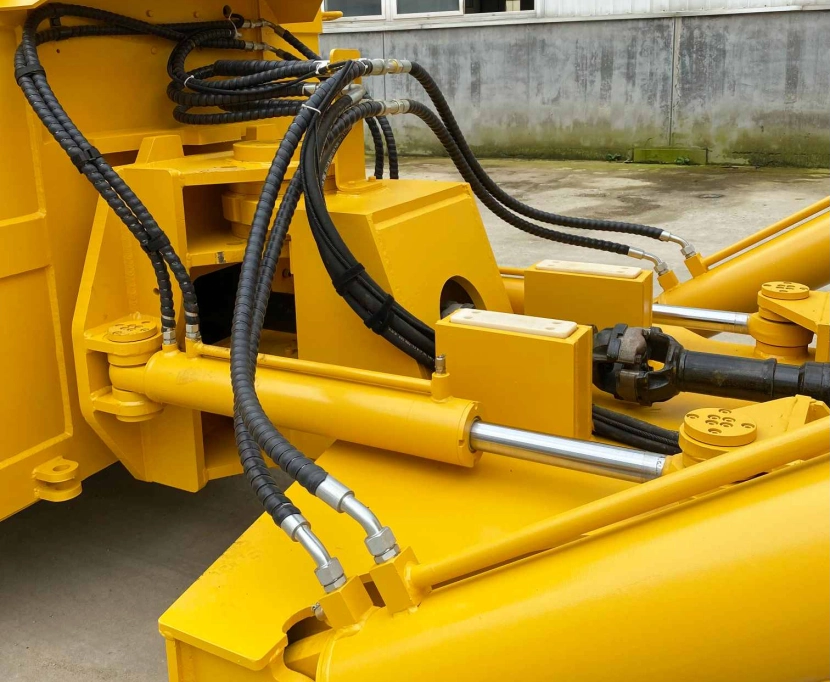
The UK-20 has an automatic alarm system for oil temperature, oil pressure and electrical system. This helps drivers spot mechanical problems early. As a result, they avoid wasteful running.
Tire Management and Alignment
Tires with low air or bad alignment raise rolling drag. So, engines must use more fuel to keep speed. Keeping right tire pressure and doing alignment checks now and then can boost mileage a lot.
The UK-20 fits large 16.00-25 PR32 L-5S TT tires. These need exact pressure control for best work on bumpy underground paths.
Use of High-Quality Lubricants and Fuels
Using top-grade, low-thick oils cuts drag in the engine. This raises mechanical work. Cleaner fuels lead to better burning and less buildup. They also lengthen engine life and cut emissions.
Optimizing Operational Practices for Better Fuel Use
Smart Route Planning in Underground Environments
Underground spots are tricky. Routes with sharp slopes, crowds, or bad air make trucks push harder. Smart planning keeps idling low and speeds steady.
Skipping extra steep parts and setting up good load-unload steps cuts fuel right away. The UK-20 has a small shape and gives high turning ease, even in tight spots. Thus, it fits well for such smart paths.
Load Management Techniques
Loading a truck too much not only wears it out but also jumps fuel use. Even loads ease drivetrain stress and raise overall mechanical work. With a tramming capacity of 20000 kg and dump box volume of 10 m³, the UK-20 keeps good load balances for medium mines.
Idle Time Reduction Measures
Idling wastes fuel for nothing. Adding automatic engine shut-off during quiet times can save a lot of fuel each year. Training drivers to cut idling—like during shift switches or load waits—works just as well.
Role of Equipment Selection in Fuel Economy
Characteristics of Fuel-Efficient Mining Trucks
New trucks use advanced drivetrain setups that pick gear changes based on load and ground. The UK-20 has a DANA RT36000 transmission and C5000 series converter. These allow smoother shifts and better fuel savings under load.
Strong torque engines like the VOLVO TAD853VE give 235kW at 2200 rpm with a max torque of 1310 Nm at 1200 rpm. They deliver power well even at slow speeds, perfect for underground pulls.
Integration of Hybrid or Electric Assist Technologies
Diesel electric drivetrains or hybrid help systems show big promise in underground places. They catch energy from braking or cut diesel use during light work. Though not common yet, this area sees more spending.
As a pro manufacturer focused on underground mining trucks and LHD loaders, Dali keeps up with these tech changes. At the same time, they stress reliability in rough mining spots.
Enhancing Operator Performance for Improved Efficiency
Driver Behavior and Its Influence on Fuel Usage
Drivers have a big hand in controlling truck fuel use. Gentle speed ups, even paces, and skipping sudden starts or halts keep engine work at its best.
Small changes like less gear searching or smart coasting can bring real savings as time goes on.
Training Programs Focused on Fuel Saving Techniques
A full training plan—that covers throttle handling, ground reaction tips, and path knowledge—helps drivers run machines better. Data from telematics after shifts can check driver habits. Then, it gives useful tips.
Leveraging Technology for Monitoring and Optimization
Telematics and Real-Time Monitoring Systems
Telematics setups watch fuel use live across routes, shifts, and drivers. This info backs choices like path tweaks, time changes, or spotting weak gear.
By mixing monitoring tools with daily plans, bosses get stronger hold on total fuel spending.
Predictive Maintenance Through Data Insights
Sensors in main parts help guess breakdowns before they hit. For instance, early warnings on air intake blocks or injector dirt can stop bad fuel burn.
The UK-20 comes with manual central lubrication as standard—this keeps key parts in good shape without drivers forgetting.
Dali provides custom vehicle fixes made for real needs in underground mines from -1500m to +5000m height. Their aim on safety, efficiency, and toughness makes them a solid choice in today’s mining transport setups.
FAQs
Q1: How much can regular maintenance improve truck fuel efficiency?
A1: Up to 10–15% improvement can be achieved through consistent maintenance practices alone.
Q2: What’s the most efficient way to reduce idle time?
A2: Combining auto shut-off systems with operator training yields the best results.
Q3: How does tire pressure affect underground truck fuel use?
A3: Underinflated tires increase rolling resistance, leading to higher fuel consumption—often by several percent per vehicle.
Q4: Are hybrid drivetrains practical in underground mining yet?
A4: Adoption is growing but still limited; diesel-electric systems show promise particularly for high-stop operations.
Q5: What makes Dali’s UK-20 suitable for underground operations?
A5: Its compact size, high power-to-weight ratio, EU III compliant engine, and robust safety features are tailored for efficient underground hauling.
About Us
Qixia Dali Mining Machinery Co., Ltd was established in 1998, located in Yantai City.
The company is mainly engaged in the design, development, production, installation and training of underground mine equipment and ore processing equipment, spare parts supply and sales.
More

Contact Us
- Xinbang Rd, Private Economy Park, Qixia, Shandong Province, China
- +86 173 5350 8179
- ytdali@ytdali.com
 +86 13553073459
+86 13553073459
+86 13553073459


