How Underground Personnel Carriers Improve Mine Worker Productivity
Underground personnel carriers turn the trip to a work area into a planned part of the shift. When crews walk long drifts, wait for a ride, or board a vehicle that does not fit the route, paid time leaves the work plan.
Well-specified underground personnel carriers give you a repeatable way to move production, maintenance, and service crews between the portal, shaft station, levels, and work areas. That transport link has a direct effect on mine worker productivity, provided you measure the complete cycle and keep the vehicle ready.
How Does Worker Travel Time Affect Mine Output?
Your baseline should cover muster, boarding, travel, unloading, the walk to the work area, and the return trip. Record the crew size, route, departure time, arrival time, and waiting minutes for several shift types. This gives you a measured mine worker transport time value for planning.
For example, a 20-person crew saving 15 minutes on two daily trips returns 10 worker-hours to the shift. The actual gain depends on work-area readiness, attendance, and route conditions.
Which Transport Delays Should You Record?
Track queues at loading points, missed trips, late shift handovers, empty seats, and time spent walking from a drop-off point. A short delay at every level can remove a complete task window by the end of a shift. Compare the same route across day, night, maintenance, and peak-production crews.
How Can You Link Travel Data to Work?
Pair arrival time with the time a crew starts drilling, bolting, inspection, repair, or haulage. Use completed work, such as development meters or maintenance jobs closed, as a second data set. This keeps a transport improvement tied to a real operating result.
How Should You Plan Underground Mine Transportation?
Good underground mine transportation starts with the layout. Map portal and shaft access, roadway width and height, gradients, turning points, drainage, traffic rules, refuge areas, and one-way sections. Then set loading locations and dispatch windows around the largest regular crews. This makes underground personnel transport easier to schedule and gives supervisors a clear handover point.
How Do You Match Seat Count to the Crew?
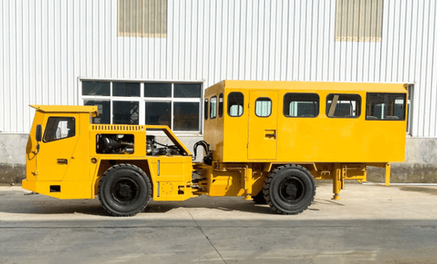
Choose a mining personnel carrier around the regular crew size, the boarding workflow, and the space needed for approved personal equipment. The product information reviewed for DALI lists 6-, 13-, 18-, 25-, and 30-seat configurations, with customization noted. Ask for the seating drawing, restraints, allowable occupancy, and access arrangement for the exact build.
What Route Checks Belong in the Purchase File?
Record the route length, gradient, surface condition, water exposure, temperature, altitude, and required trips per shift. Compare the selected mine transportation equipment with the route before ordering. Request vehicle dimensions, weight, turning radius, braking data, and clearance drawings for the chosen configuration. Seat count alone does not define usable capacity on a narrow or sharply curved roadway.
Which Powertrain Fits the Underground Route?
Powertrain choice affects ventilation, refueling or charging, service time, and daily dispatch. Compare the actual duty cycle: passenger load, gradient, distance, stops, auxiliary loads, and shift length. This gives you a practical basis for selecting a diesel unit, a battery electric personnel carrier, or a rail-linked arrangement.
What Should You Check on a Diesel Unit?
Review fuel storage, exhaust treatment, cooling, noise, ventilation demand, and service intervals. The reviewed product page lists a diesel engine and a catalytic purifier with muffler. Confirm the engine model, emissions documents, and mine ventilation requirements for your destination before approval.
What Changes With Battery Electric Transport?
Plan the charger location, connector protection, charging window, battery monitoring, thermal response, and recovery procedure for a low state of charge. Use route tests to confirm usable range under the passenger load and gradient you operate. A charging plan belongs in the shift schedule, maintenance plan, and emergency procedure.
Which Personnel Carrier Safety Features Protect Crew Readiness?
Personnel carrier safety features affect attendance and shift continuity because a failed safety control can remove a vehicle from service. Check restraints, doors, emergency exits, lighting, alarms, communications, cameras, fire protection, steering, service brakes, park brakes, and isolation points. Match each check to the mine procedure, local regulation, and OEM manual.
What Product Details Need Model Confirmation?
The reviewed DALI information lists a 40-degree articulated frame, four-wheel drive, four-wheel braking, SAHR spring-applied hydraulic-release braking, front NO-SPIN and rear anti-slip differentials, plus oil-temperature, oil-pressure, and electrical-system alarms. Confirm the exact specification, test method, and approval documents for the seat configuration you plan to buy.
When Should You Remove the Vehicle From Service?
Set site rules for brake or steering loss, failed restraints or door interlocks, fire-system faults, major leaks, structural damage, severe tire damage, high-voltage warnings, and loss of emergency communication. Record the defect, isolate the vehicle, repair it, and complete a functional test before release.
How Can Maintenance Protect Mine Fleet Utilization?
Transport capacity disappears when inspections, parts, or repairs arrive during a production window. Use shift checks for tires, wheels, brakes, steering, lights, alarms, restraints, fluids, leaks, and visible damage.
Schedule hour-based service for the engine or battery system, cooling, driveline, hydraulics, and charging equipment. Track planned work, repeat defects, repair time, and mine fleet utilization in the same review.
Which Records Help You Find Repeat Delays?
Keep the asset ID, meter hours, route, passenger load, warning code, defect, measurement, parts used, repair action, test result, and return-to-service approval. Link each parts issue to a work order. A clean record shows whether a delay came from the vehicle, the roadway, the loading process, or the shift plan.
How Does DALI Connect Carrier Choice With Productivity?
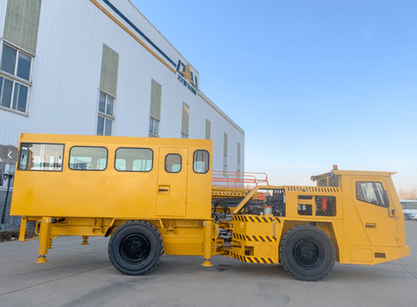
The transport decision becomes clearer when seat count, roadway geometry, braking, and service support are discussed together. DALI’s underground vehicle range includes a dedicated underground personnel carrier for crew movement in mine roadways and tunnel projects. The listed configurations cover 6, 13, 18, 25, and 30 seats.
A 40-degree articulated frame supports maneuvering through underground intersections, while four-wheel drive and four-wheel braking address traction and stopping requirements. The page also lists SAHR braking and operating alarms for oil temperature, oil pressure, and the electrical system.
For a quotation, prepare the crew size, tunnel profile, gradients, route length, shift schedule, destination requirements, and required safety options. Those details let you compare a mining personnel carrier against the work you need it to perform.
Which KPIs Show a Productivity Change?
Review transport and work data together. Useful measures include worker travel minutes per shift, loading time, cycle time, trips completed, seat utilization, on-time arrival rate, transport waiting minutes, carrier availability, unplanned downtime, maintenance cost per operating hour, and mine fleet utilization.
Add work-area measures such as task start time, completed inspections, development meters, tonnes moved, or repair jobs closed. This combined view supports decisions about underground mining productivity and helps you adjust routes, dispatch windows, staffing, or fleet size.
How Should You Run a Before-and-After Trial?
Set a baseline period and a pilot period with matched routes, shift types, passenger loads, and measurement owners. Report the median and range for travel, waiting, and task-start time. Keep safety events, maintenance events, and worker feedback beside the output data. A short route trial often reveals a boarding bottleneck that a brochure cannot show.
FAQ
Q1: What are underground personnel carriers used for?
A: They move production, maintenance, and service crews between approved underground access points and work areas. Seat layout, occupancy, dimensions, and local approvals must match the mine route.
Q2: How do underground personnel carriers improve mine worker productivity?
A: They organize boarding, reduce walking and waiting minutes, and give supervisors a repeatable arrival window. You should confirm the result with travel records and work-area start times.
Q3: How do you choose a battery electric personnel carrier?
A: Match passenger load, route distance, gradient, shift length, charging time, battery monitoring, emergency response, and service support to measured duty-cycle data.
Q4: Which personnel carrier safety features should buyers verify?
A: Verify restraints, doors, emergency exits, brakes, steering, lighting, alarms, communications, fire protection, isolation points, and the approvals required for your mine and destination.
Q5: How can transport data support underground mining productivity?
A: Compare travel minutes, cycle time, waiting, on-time arrival, and task-start data with completed work. Use the findings to adjust routes, loading controls, dispatch, maintenance, or fleet size.
About Us
Qixia Dali Mining Machinery Co., Ltd was established in 1998, located in Yantai City.
The company is mainly engaged in the design, development, production, installation and training of underground mine equipment and ore processing equipment, spare parts supply and sales.
More
Contact Us
- Xinbang Rd, Private Economy Park, Qixia, Shandong Province, China
- +86 173 5350 8179
- ytdali@ytdali.com
 +86 13553073459


