LHD Bucket Selection Guide: Balancing Loading Methods & Material Characteristics
A bucket that looks right in a quotation can behave very differently at the drawpoint. Effective LHD bucket selection depends on LHD loading methods, material characteristics, LHD rated payload, tunnel clearance, haul distance, and the discharge point. Do not chase the largest bucket.
You need an underground mining LHD bucket that fills predictably, stays within machine limits, and supports the lowest cost per tonne. The LHD product range should be reviewed by duty, not bucket volume alone.
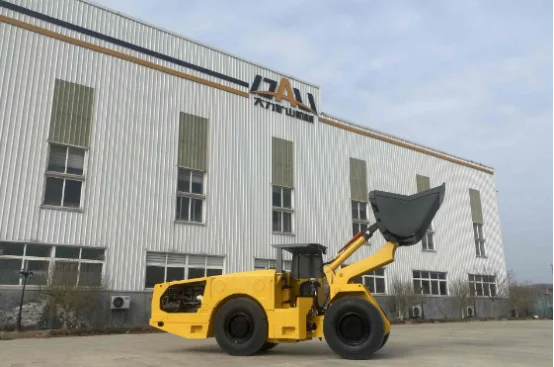
Why Does LHD Bucket Selection Matter in Underground Mining?
Bucket selection for underground mining affects penetration resistance, payload, material spillage, tire slip, hydraulic demand, and total cycle time. A poor match often leads to extra passes, hot hydraulics, damaged edges, or repairs.
Start with the Production Task
Define where the machine loads and dumps. Truck loading needs suitable lift height and truck pass matching. Direct hauling to an ore pass puts more weight on material retention and bucket rollback angle. Narrow-vein mining may call for a narrower bucket to limit dilution.
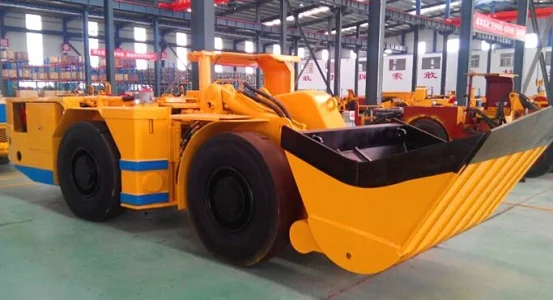
Choose between an LHD dump bucket and an LHD ejector bucket. In a dump bucket vs ejector bucket decision, the dump type is simpler. The ejector type can discharge without a large tipping motion, which helps in confined headings or with sticky material, but it adds hydraulic parts.
Measure What Matters
Do not judge LHD productivity by nominal bucket capacity alone. Track bucket fill factor, payload, loading time, tonnes per hour, wheel slip, and energy consumption per tonne. A smaller bucket that fills in one pass can beat a larger bucket that needs repeated crowding. Underground mining cost per tonne is the better test.
How Do LHD Loading Methods Change Bucket Choice?
LHD scooping methods control how the cutting edge enters the pile and how the bucket fills. They also change the force seen by the lip, boom, cylinders, tires, and driveline. LHD bucket geometry and operating practice must work together.
Compare the Main Scooping Methods
One-step scooping uses continuous forward penetration. It is quick in loose muck, but resistance rises when the bucket pushes too deep.
Step-by-step scooping divides penetration, lift, and curl into stages. It gives you more control in an uneven pile, though the cycle may take longer.
Excavating scooping uses stronger lifting or digging motion. It can help with compacted material, but it needs adequate breakout force and suitable cutting edge geometry.
Coordinated scooping combines penetration, boom lift, and bucket curl. A peer-reviewed study compared four methods with discrete element method simulation and found coordinated scooping gave the best overall performance. It also linked bucket reaction force to trajectory, geometry, and material behavior.
Control the Bucket Path
The LHD scooping trajectory should avoid deep horizontal pushing after resistance climbs. Begin lift and curl when material starts flowing into the bucket. This can improve LHD loading efficiency.
For automatic LHD scooping or autonomous LHD loading, repeatability matters more. Predictable bucket–material interaction makes automatic loading more reliable.
How Do Material Characteristics Affect LHD Bucket Capacity?
Material density and bucket capacity must be checked together. The same 3 m³ bucket may suit one broken ore and overload the machine in another. Loose bulk density, not only in-situ rock density, should guide the first calculation.
Calculate Expected Payload
Use this relationship:
Expected payload = nominal bucket capacity × loose bulk density × bucket fill factor
Compare the result with the LHD rated payload, then allow for liners, teeth, shrouds, and other bucket wear protection. A 3.0 m³ bucket filled to 90% with material at 2.5 t/m³ carries about 6.75 tonnes. At 3.0 t/m³, it carries 8.1 tonnes and may overload a 7-tonne machine. Simple math, but useful.
Check Fragmentation, Moisture, and Wear
Material fragmentation changes how rock packs inside the bucket. Oversize lumps create voids, lower bucket fill factor, and strike the lip harder. Fine wet ore can stick to the floor and cause carryback. Clay content may make an LHD ejector bucket useful if your maintenance setup supports it.
Material hardness affects penetration resistance, while material abrasiveness affects bucket service life. For abrasive underground ore, consider a reinforced LHD bucket, replaceable wear liners, side cutters, heel protection, and suitable ground engaging tools for LHD. Too much protection adds dead weight.
How Should You Match Bucket Type and Machine Capacity?
The best bucket for underground mining LHDs fits the machine, heading, material, and production plan as one system. Check payload, breakout force, axle load, lift geometry, and dumping clearance.
Choose Capacity Before Extras
Start with realistic material density and fill factor. If a large bucket reduces bucket loading efficiency or causes wheel spin, step down in volume or change the lip profile.
A current battery electric LHD example pairs a 3.0 m³ standard bucket with a 7,000 kg tramming capacity and lists mechanical and hydraulic breakout force. This lets you judge volume, payload, and digging ability together.
Select Geometry and Wear Parts
Bucket width should suit the heading. Bucket rollback angle matters during long tramming distances. Bucket dump angle matters at the truck or ore pass. The lip and ground engaging tools should match rock size and material abrasiveness.
For narrow-vein work, a low-profile LHD bucket can reduce waste pickup. Low-density material may suit more volume. Dense ore usually needs a smaller reinforced bucket. Custom LHD bucket work makes sense when a standard profile causes spillage, poor penetration, or clearance trouble.
How Can You Validate an LHD Bucket Underground?
A site trial gives a better answer than a brochure. Test the bucket in the actual heading, with production material and haul route. Use enough cycles to capture fragmentation changes.
Run a Controlled Trial
Record payload consistency, bucket fill factor, loading time, total cycle time, wheel slip, hydraulic pressure, retained material, and dumping completeness. Inspect the cutting edge and liners after set hours.
Look beyond tonnes per hour. A bucket may load fast but create high energy use, tire wear, or frequent welding. Review bucket maintenance cost, wear-part use, downtime, and lost production. Recheck the choice when blasting, ore density, moisture, truck size, or haul distance changes.
Where Does DALI Fit into Your Selection Process?
DALI is useful when you need to discuss the bucket as part of the full underground loading system. Its official portfolio covers electric, battery-electric, and diesel LHD configurations across several capacity classes, plus underground trucks, auxiliary vehicles, processing equipment, spare parts, installation, training, and project services.
It also states that remote-control capability is available on part of its underground equipment and that its equipment has reached projects in more than 80 countries. This scope matters when bucket-to-truck matching, tunnel size, power choice, parts supply, and after-sales support must be settled together.
FAQ
Q1: How do you choose the correct LHD bucket size?
A: Calculate expected payload from nominal bucket capacity, loose bulk density, and bucket fill factor. Keep it below the LHD rated payload and include wear-part weight.
Q2: Is a larger LHD bucket always more productive?
A: No. It may cause poor penetration, wheel slip, overload, and longer loading time. Productivity depends on consistent payload and total cycle time.
Q3: How does material fragmentation affect LHD bucket filling?
A: Good fragmentation improves packing and bucket fill factor. Oversize rock creates voids, raises impact loads, and often needs extra crowding.
Q4: What is the difference in dump bucket vs ejector bucket selection?
A: A dump bucket tips to release material. An ejector bucket pushes material out, which suits low-clearance or sticky-material work but adds hydraulic complexity.
Q5: When should LHD bucket selection be reviewed?
A: Review it after changes in ore density, fragmentation, moisture, blasting, truck size, haul distance, production target, or loading automation.
About Us
Qixia Dali Mining Machinery Co., Ltd was established in 1998, located in Yantai City.
The company is mainly engaged in the design, development, production, installation and training of underground mine equipment and ore processing equipment, spare parts supply and sales.
More
Contact Us
- Xinbang Rd, Private Economy Park, Qixia, Shandong Province, China
- +86 173 5350 8179
- ytdali@ytdali.com
 +86 13553073459
+86 13553073459
+86 13553073459


