Sizing and Equipping LHDs for Underground Mining
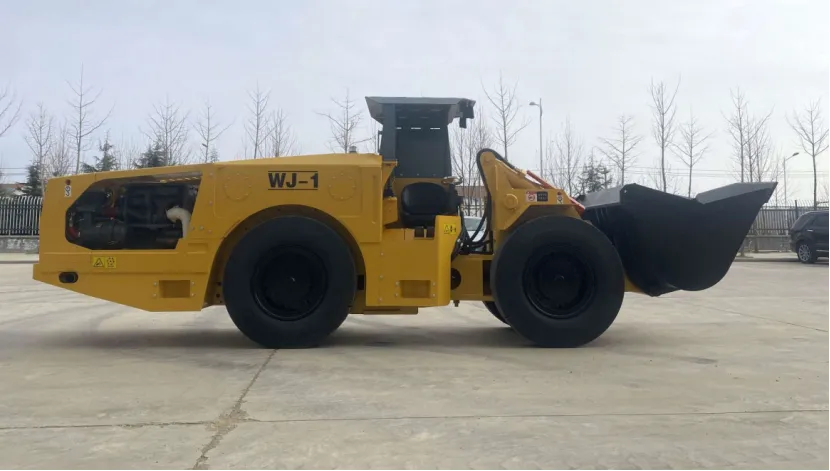
LHD sizing for underground mining starts with the mine, not the equipment catalog. A load haul dump machine must pass through the smallest drift, turn at real intersections, climb loaded ramps, and move enough material to meet the shift target. A larger machine may carry more per trip, but that advantage disappears if it needs repeated corrections at every corner.
Good LHD equipment selection also covers the bucket, tires, powertrain, hydraulics, safety systems, and maintenance access. These parts work as one package. If any one of them is poorly matched, cycle time rises and cost per tonne usually follows.
How Should LHD Sizing Start?
Before comparing an LHD product range, collect actual mine measurements and production records. Drawings help, but field dimensions are better. A ventilation duct installed last year can reduce usable clearance more than expected.
Start with Drift Dimensions
Record underground mine drift dimensions at the narrowest and lowest points. Include pipework, cables, drainage channels, road unevenness, and the space needed for a person to pass safely.
LHD overall dimensions should be checked in both straight travel and full articulation. A machine body may clear the drift while the rear frame, bucket corner, or tire enters the wall during a turn. Check the LHD turning radius at intersections, stope entrances, loading bays, and dump points.
The size range can be wide. For example, one compact diesel unit listed by DALI measures 5,050 × 1,150 × 1,950 mm, while a larger 14-tonne unit measures 10,644 × 2,700 × 2,505 mm and is listed for tunnels above 4.2 × 3.8 m. That is why underground loader sizing cannot rely on payload alone.
Match Payload to the Duty Cycle
LHD payload capacity should support your required tonnes per shift after delays are included. Use actual LHD cycle time, not a best-case travel speed. Count loading, loaded travel, dumping, empty return, turning, queueing, and short interruptions.
A simple check is:
Required payload per cycle = shift target ÷ realistic completed cycles
Then allow for bucket fill factor and equipment availability. A 10-tonne rated machine that regularly carries 7.5 tonnes is not delivering 10-tonne production. This small gap becomes large after 60 or 80 cycles.
Mining LHD sizing should also reflect underground haul distance. Short hauls place more weight on loading speed and maneuverability. Long ramps increase the importance of tractive effort, braking, cooling, and energy use.
How Should the Bucket and Powertrain Be Chosen?
After the machine fits the excavation and meets the production target, you can configure the working tools and drive system. These decisions affect how easily the machine fills, how much heat it produces, and how often it must stop.
Match Bucket Capacity to the Material
LHD bucket capacity must suit both payload and broken-rock density. Dense ore may reach the rated load before a large bucket is full. Lower-density waste may need more volume to reach the same mass.
LHD bucket selection should also consider fragmentation and drawpoint conditions. A general-purpose bucket works in many headings. A reinforced rock bucket suits abrasive material, while a low-profile design can improve access under a low brow. An ejector bucket may help where unloading height or dump space is limited.
Check the LHD breakout force as well. DALI’s compact 1.2-tonne unit lists a 0.6 m³ bucket and 35 kN maximum breakout force. Its larger 14-tonne unit uses a 6 m³ bucket and lists 224 kN. The figures show how bucket volume, payload, machine mass, and digging force rise together.
Choose between Diesel and Electric Power
A diesel LHD for underground mining gives you flexible movement when working areas change often. Still, fuel, exhaust treatment, ventilation, cooling, and engine service belong in the operating-cost calculation.
A cable electric LHD reduces underground exhaust and can suit repeat work within a defined operating area. Cable routing, reel capacity, corner wear, and available power points need attention. A cable caught near a tire can stop an otherwise productive shift.
A battery electric LHD removes local diesel exhaust but adds charging, battery cooling, fire response, and energy-planning requirements. One battery electric LHD listed by DALI carries 7,000 kg with a 3 m³ standard bucket. Its stated battery capacity is 282 kWh, with a listed minimum charge time of one hour from 0 to 90 percent. It is also presented as automation-ready.
LHD powertrain selection should come from the full duty cycle. A clean power source is useful, but it still has to finish the shift.
Which Mechanical Specifications Matter Most?
Specification sheets contain plenty of numbers. Focus first on the values that affect access, loading, ramp travel, stability, and stopping performance.
Check Gradeability and Ground Clearance
LHD gradeability should be reviewed at full load. Confirm the length and surface condition of the ramp, not only its maximum angle. Both the compact and larger diesel examples above list a loaded climbing ability of 20 degrees, but their payload, traction, speed, and cooling requirements differ greatly.
LHD ground clearance needs enough margin for loose rock, drainage channels, and changes at ramp crests. More clearance is not automatically better because it can raise the center of gravity.
Match Tires and Hydraulics to the Ground
LHD tire selection depends on wheel load, travel speed, sharp rock, moisture, and heat. Underground mining tires may use treaded or smooth patterns, depending on the floor and operating area. Track cuts, sidewall damage, pressure loss, and tire life by location. The cheapest tire per unit is not always the lowest-cost tire per hour.
The LHD hydraulic system should provide suitable lift, tilt, and breakout performance without running continuously near its temperature limit. Ask for boom-raising, lowering, and dumping times. Also check filtration access, hose routing, oil-temperature alarms, and protection around exposed lines.
What Safety and Control Equipment Should Be Specified?
Underground LHD safety must cover normal driving, loading, maintenance, and emergencies. Do not treat safety items as accessories added after the main quotation.
Specify Core Safety Equipment
LHD safety equipment should include suitable operator protection, emergency stops, reliable service and parking brakes, warning alarms, working lights, and fire protection. Cameras and proximity detection can help where the operator has blind spots around the bucket, rear frame, and articulation joint.
DALI’s published specifications describe four-wheel driving and braking, combined working and parking brakes, low-vibration operator areas, and automatic alarms for oil temperature, oil pressure, and electrical faults on selected machines. A larger listed model also includes an operator canopy with rollover and falling-object protection certification.
Decide Whether Remote Operation Is Needed
A remote control LHD can reduce operator exposure near open stopes, unstable brows, or recently blasted areas. An autonomous LHD may support repeat tramming routes and longer production windows, but LHD automation needs communication coverage, exclusion zones, personnel detection, recovery procedures, and trained controllers.
An LHD telematics system can record payload, cycle count, idle time, temperatures, alarms, and battery state. Data is useful only when someone reviews it and acts. Otherwise, it is just another screen underground.
How Do Maintenance and Cost Affect Selection?
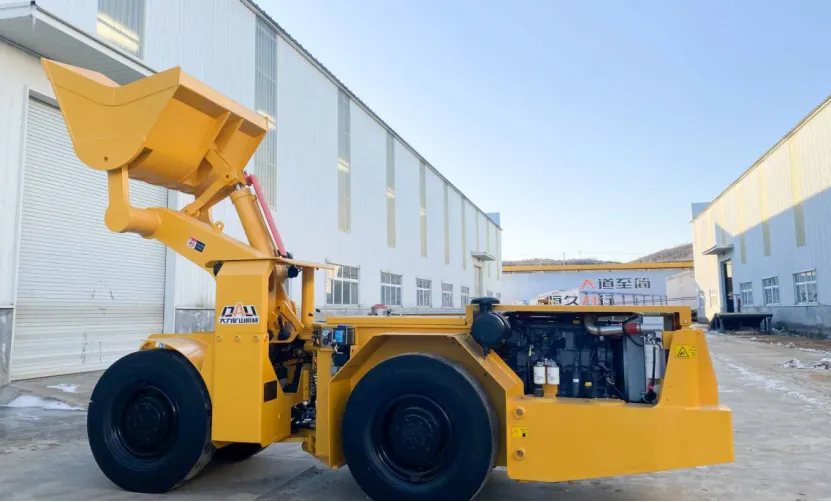
LHD maintenance requirements should be reviewed before purchase, while service points and major components are still visible in drawings. Underground repair space is limited. Sometimes painfully limited.
Check Service Access
Ask how technicians reach filters, articulation pins, brakes, hydraulic valves, batteries, radiators, and powertrain components. Confirm whether major assemblies can pass through the access route to the workshop.
Daily checks should be simple. If a filter or grease point is hard to reach, it may not receive attention as often as the maintenance plan says it should.
Compare Total Cost per Tonne
LHD total cost of ownership includes purchase price, power or fuel, tires, wear parts, ventilation, labor, planned service, breakdowns, infrastructure, and lost production.
Underground mining equipment cost may also include wider drifts, charging stations, electrical distribution, workshops, and automation networks. Compare cost per moved tonne over the expected service life. Purchase price alone tells only the first part of the story.
How Should the Final Selection Be Validated?
Underground LHD selection should finish with a site review, production calculation, and trial where practical. A brochure can narrow the list. It cannot reproduce your floor, fragmentation, traffic, or operators.
Verify the Technical Data
Review LHD machine specifications for payload, bucket capacity, dimensions, articulation, breakout force, traction, gradeability, speed, operating weight, unloading height, and safety systems.
Model the proposed machine through the tightest routes. Then estimate tonnes per hour with realistic delays. A final LHD selection checklist should include operator feedback, maintenance access, parts support, training, and future mining areas. The machine needs to fit next year’s headings too, not only today’s stope.
Where Does DALI Fit into Your Selection Process?
DALI was established in 1998 and operates a reported 130,000 m² factory. Its website lists more than 200 employees, including 90 technicians and engineers. The company designs, develops, manufactures, installs, and supports underground mining and mineral-processing equipment, with training and spare-parts supply also included in its stated scope.
Its LHD lineup includes compact diesel and cable-electric machines, larger diesel units, and a battery electric model. Published payload examples range from 1.2 to 14 tonnes, which gives buyers options for narrow-vein work and larger production headings. DALI also states that its equipment serves more than 900 mines, that it has contributed to over 500 processing plants, and that products have been exported to more than 80 countries. Its service scope covers consulting, testing, engineering, production, shipping, commissioning, and training.
FAQ
Q1: How is LHD sizing for underground mining calculated?
A: Start with drift dimensions, turning space, production target, cycle time, payload, and material density.
Q2: How should LHD payload capacity be selected?
A: Divide the shift target by realistic completed cycles, then account for fill factor, delays, and availability.
Q3: Is an electric LHD for underground mining better than diesel?
A: It depends on haul routes, power infrastructure, ventilation cost, charging needs, and how often the work area changes.
Q4: What belongs in an LHD selection checklist?
A: Include dimensions, payload, bucket, gradeability, tires, hydraulics, brakes, fire protection, maintenance access, and lifecycle cost.
Q5: When should a mine use a remote control LHD?
A: Remote control is useful where operators face unstable ground, open stopes, blast hazards, heat, or limited visibility.
About Us
Qixia Dali Mining Machinery Co., Ltd was established in 1998, located in Yantai City.
The company is mainly engaged in the design, development, production, installation and training of underground mine equipment and ore processing equipment, spare parts supply and sales.
More
Contact Us
- Xinbang Rd, Private Economy Park, Qixia, Shandong Province, China
- +86 173 5350 8179
- ytdali@ytdali.com
 +86 13553073459
+86 13553073459
+86 13553073459


