The Impact of Electric LHDs on Mine Ventilation Systems
Ventilation is one of the biggest hidden costs behind an underground loading fleet. When diesel loaders work for hours in headings and ramps, you are not only moving ore. You are also dealing with exhaust gases, diesel particulate matter, and engine heat. That is why the move toward electric LHDs matters beyond the machine itself. It can change how mine ventilation systems are planned, operated, and eventually sized.
Still, electrification does not mean “turn the fans down and forget about them.” A sound electric LHD mine ventilation plan must account for heat, dust, blast fumes, charging areas, natural gases, and emergency conditions.
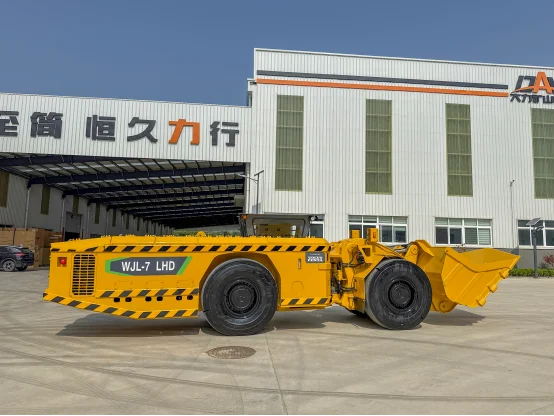
Why Do Electric LHDs Change Mine Ventilation Requirements?
The main difference starts at the source. A diesel loader burns fuel underground. A battery electric LHD does not create diesel exhaust during operation. For mines where mobile diesel equipment drives a large share of airflow demand, that distinction can be substantial.
Diesel Exhaust Is Removed at the Source
A diesel engine introduces particulate matter and gases such as NOx and CO into the workplace. Ventilation has traditionally diluted these contaminants to acceptable levels. This relationship is one reason diesel fleet size and engine power matter when calculating mine ventilation requirements.
With electric mining equipment, that diesel-related contaminant load disappears from the machine. The practical benefits of electric LHDs for mine air quality are therefore most obvious around loading points, blind headings, and ramps where loaders repeatedly work in the same air volume.
If you are assessing how electric LHDs reduce mine ventilation requirements, start by identifying how much of your present airflow exists mainly to dilute mobile diesel emissions.
Lower Heat Does Not Mean Zero Heat
Electric drives are generally more efficient than diesel powertrains, so less input energy ends up as underground heat. Regenerative braking can also return energy to the battery during downhill travel instead of releasing all of it through braking and engine losses.
One instrumented comparison cited in industry guidance recorded a 0.4°C WBGT increase during the battery-electric test, compared with 3.0°C for the equivalent diesel test. That is useful evidence, but not a universal design value. Your duty cycle, gradient, load, motor efficiency, and road conditions still matter.
The heat load of electric LHDs in underground mines must therefore be calculated, not assumed to be zero.
Can You Reduce Airflow after Replacing Diesel LHDs?
Potentially, yes. But an automatic percentage reduction is risky. Current industry discussion of ventilation and mine electrification points toward a broader change: once diesel emissions fall, other contaminants and heat sources can become the factors that set your final air volume.
Other Ventilation Loads Still Remain
A proper underground mine ventilation calculation still has to cover dust from mucking and road traffic, blast fumes, rock heat, groundwater, auto-compression, and natural gases where present.
Air velocity also matters. Very low velocity can increase blast-clearing time. Very high velocity can lift more dust. So the impact of battery electric LHDs on underground ventilation is not simply “less diesel equals less air.”
A diesel vs electric LHD comparison should instead ask which factor becomes the new controlling ventilation load after the diesel engine disappears.
Charging Can Add Local Heat
Charging infrastructure creates its own heat. Industry guidance notes typical charger heat losses around 5% to 10%, depending on the equipment and operating conditions. Four 400 kW chargers running together at 10% loss could introduce about 160 kW of heat into one charging area.
That is a decent amount of heat in a confined underground station. Charger placement, cooling, airflow, and charging schedules therefore belong in the same model as the mobile fleet.
What Changes in Mine Ventilation System Design?
Once you know the revised contaminant and heat loads, you can look at the ventilation network itself. This is where underground mining electrification becomes a mine-design issue rather than a simple equipment purchase.
Existing Mines Need a New Baseline
For a brownfield operation, start with actual airflow, fan duty, diesel fleet activity, temperature records, dust measurements, and production schedules. Then model the electric fleet against the same operating conditions.
Do not reduce fan speed merely because several loaders were replaced. Mine ventilation systems must still satisfy local air-quality rules, minimum velocities, heat limits, blast-clearing needs, and emergency plans.
In practice, ventilation on demand may become more useful. Fans can respond to real equipment location, production activity, temperature, or contaminant readings instead of moving maximum air everywhere throughout the shift.
Greenfield Mines Have More Design Freedom
The ventilation design for electric underground mines can begin with smaller diesel-related contaminant loads rather than adapting infrastructure built around a conventional fleet. That may affect airway dimensions, fan selection, refrigeration demand, and charging-station locations.
This is particularly relevant when planning battery electric vehicles in underground mining across an entire fleet. LHD duty cycles, charging strategy, production levels, and ventilation should be studied together. One poorly located charging bay can undo some of the thermal benefit gained at the working face.
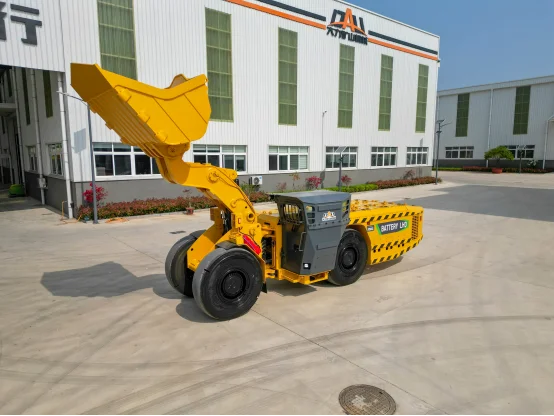
What New Safety Issues Come with Battery Electric LHDs?
Electrification changes the risk profile rather than removing risk. You trade routine diesel combustion emissions for high-voltage systems, batteries, charging equipment, and different emergency scenarios.
Battery and Charging Areas Need Specific Planning
Lithium-ion systems require thermal management, monitoring, suitable maintenance areas, and a response plan for abnormal battery conditions. Thermal runaway can release heat, smoke, and hazardous or flammable gases, so emergency airflow and escape routes deserve specific review.
This is also why electric LHD mine ventilation work should involve production, ventilation, electrical, and emergency-response teams. The charger cannot be treated as a plug on the wall. Its location affects heat, traffic, electrical infrastructure, and equipment availability.
How Should You Assess an Electric LHD Project?
The best assessment starts with the mine rather than a headline ventilation-saving percentage. Route grade, bucket demand, shift length, airflow constraints, charging windows, and ambient temperature will often tell you whether the project fits.
Check the Whole Operating Cycle
Before selecting a battery electric LHD, check payload and bucket size against drift dimensions and production targets. Then review battery capacity, usable runtime, charging time, gradients, regeneration opportunities, charger locations, and service access.
For the ventilation side, record existing diesel emissions, equipment heat, dust, blast-clearing time, and non-equipment heat sources. Recalculate the final air volume after the fleet change. This gives you a defensible answer instead of a rough diesel-to-electric conversion factor.
A practical project also considers operating cost. Lower airflow may reduce fan and refrigeration demand, but charging infrastructure, electrical distribution, battery management, and equipment availability still affect the business case.
Choosing an Electric LHD That Fits Your Ventilation Plan
Once the ventilation model is clear, equipment data needs to match it. This is where supplier capability becomes relevant because motor power, battery thermal behavior, charging method, and duty cycle all feed directly into the mine heat model.
DALI develops and supplies underground mining equipment and provides design, production, installation, training, spare-parts, and service-related support. Its electric LHD range includes cable-powered and battery-powered machines for different mine layouts.
For example, the DALI battery electric LHD listed for small to medium underground operations has a 7,000 kg tramming capacity, 3.0 m³ standard bucket, 282 kWh LiFePO4 battery, liquid-cooled cells, integrated thermal management, energy regeneration, and a stated 0 to 90% minimum charging time of one hour. These are the kinds of figures you need when connecting equipment selection with airflow, heat, charging, and production calculations.
FAQ
Q1: Do electric LHDs require less ventilation than diesel LHDs?
A: Often they can, because electric LHDs remove diesel exhaust and usually produce less equipment heat. Final airflow still depends on dust, heat, blast fumes, natural gases, and regulatory limits.
Q2: Can mine airflow be reduced immediately after replacing diesel loaders?
A: No. Recalculate mine ventilation requirements using the new fleet, actual duty cycles, heat sources, dust levels, and minimum air velocities before changing fan settings.
Q3: Do electric LHDs create heat underground?
A: Yes. Motors, drivetrain losses, batteries, auxiliary systems, and chargers produce heat, although the total can be substantially lower than comparable diesel equipment.
Q4: Does ventilation on demand work well with electric fleets?
A: It can. Ventilation on demand lets airflow follow equipment activity and measured mine conditions, which may capture more of the ventilation benefit created by electrification.
Q5: What should you check before buying an electric LHD?
A: Check drift size, payload, bucket capacity, gradients, duty cycle, battery capacity, charging time, charger location, operating temperature, ventilation conditions, maintenance access, and service support.
About Us
Qixia Dali Mining Machinery Co., Ltd was established in 1998, located in Yantai City.
The company is mainly engaged in the design, development, production, installation and training of underground mine equipment and ore processing equipment, spare parts supply and sales.
More
Contact Us
- Xinbang Rd, Private Economy Park, Qixia, Shandong Province, China
- +86 173 5350 8179
- ytdali@ytdali.com
 +86 13553073459
+86 13553073459
+86 13553073459


