Choosing between 30-ton vs 40-ton mining dump trucks is not only about capacity. Deep shaft haulage brings long ramps, tight corners, heat, dust, wet roads, and repeated braking. A 30-ton mining dump truck may suit an older mine. A 40-ton mining dump truck can move more ore per trip and may deliver a lower cost per ton, but only when your site can support it.
Payload is the clearest point in a 30-ton vs 40-ton mining dump truck comparison. Rated capacity alone does not decide output. You also need payload per cycle, loading and queue time, travel speed, and mining truck cycle time.
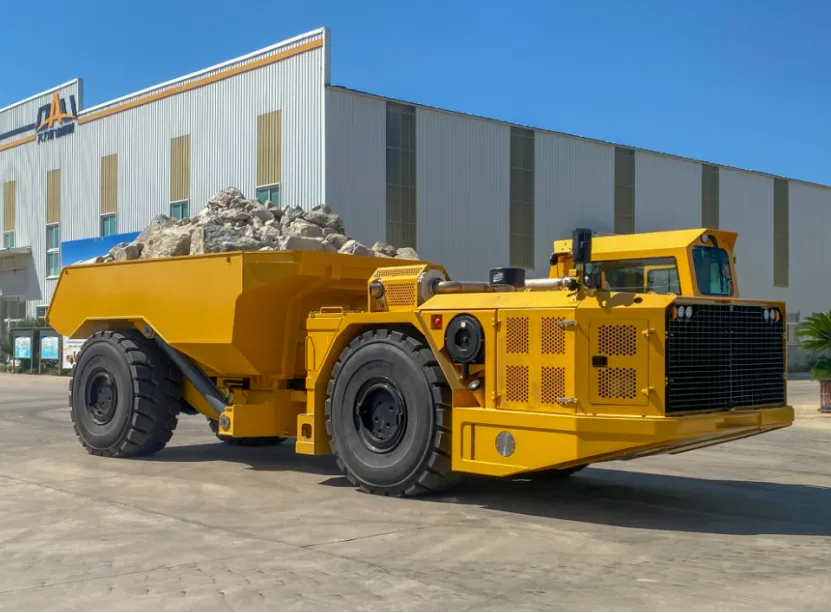
The 40-ton mining dump truck has a rated capacity of 40,000 kg and a 20 m³ body. The 30-ton unit carries 30,000 kg with a 15 m³ body. Both list 20° climbing ability.
For a 1,200-ton shift target, full rated loads mean 40 trips with the smaller truck or 30 with the larger one. Ten fewer cycles mean less loading, dumping, and empty return travel. It can also mean less congestion on a single-lane ramp.
This is where 40-ton mining dump truck payload capacity can raise underground haul truck productivity. But the body must be filled quickly. If your loader needs too many passes, the 40-ton mining dump truck haul cycle loses time. Match body volume with loader bucket size, ore density, and actual fill factor.
A 40-ton mining dump truck for deep shaft operations must fit the mine before it can improve production. Measure the narrowest point, not the average drift. Old intersections, ventilation doors, service bays, and dump pockets often settle the matter.
The 30-ton mining dump truck fits a 3.5 × 3.5 m heading. Its listed mining truck turning radius is 5,010/8,990 mm, with a 5,488 mm unloading height and 20° climbing ability. These underground truck dimensions make it a practical deep shaft mining truck for narrow development and sharp bends.
For a 40-ton underground dump truck, check road width, roof clearance, articulation space, passing bays, dump clearance, and workshop access. The workshop door sounds minor until a truck needs repair and cannot get inside.
Published underground mining truck gradeability helps screening, but loaded uphill performance changes with road condition, tire wear, heat, and rolling resistance. Downhill control matters too. Braking heat is a daily issue in deep shafts.
40-ton mining dump truck fuel efficiency should not be judged only by liters per hour. A larger machine may burn more each hour while moving more tonnes. Mining truck fuel consumption per ton gives you the fairer comparison.
Add fuel, labor, tires, planned service, repairs, road upkeep, depreciation, and downtime. This is the basis for mining truck total cost of ownership and 40-ton mining dump truck total cost of ownership.
A larger unit may reduce the number of machines in an underground mine truck fleet. Fewer trucks can mean fewer drivers, inspections, and traffic conflicts, which may cut underground mining fleet cost. Yet larger trucks can need stronger roads and wider passing bays.
Your 40-ton mining dump truck cost per ton must include those changes. The same applies to mining truck operating cost and mining truck maintenance cost. Dust, water, vibration, and heat punish missed service. Fast spare-parts access often matters more than a small saving on the invoice.
For a sound 40-ton mining truck ROI review, compare both options over the remaining mine life. Use the same output, distance, road condition, shift hours, and availability. Mining truck return on investment should come from your records. The final measure is cost per tonne moved and steady production.
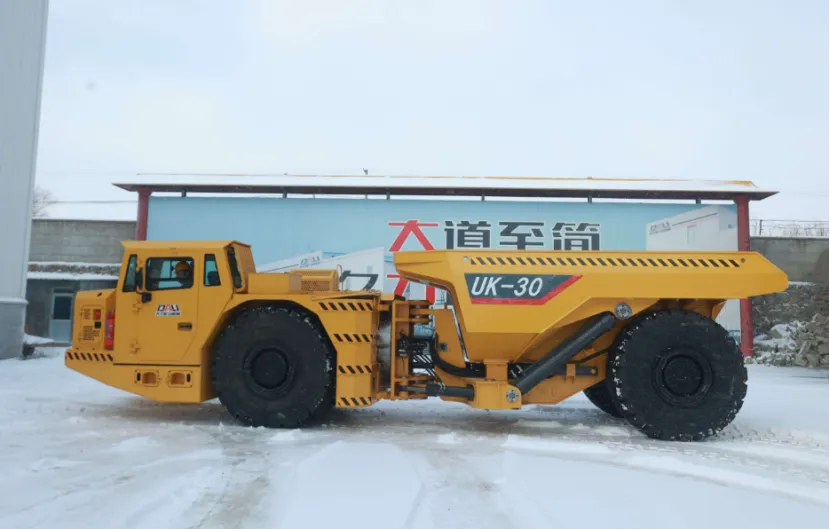
Bigger is not automatically better. An underground mining dump truck must match the mine and production plan. A truck that runs half-loaded or waits at corners is not a bargain.
Choose the smaller truck when headings are close to 3.5 × 3.5 m, turns are tight, hauls are short, or the loader cannot fill a 20 m³ body efficiently. It may also suit a mine with a short remaining life, where tunnel changes would take too long to repay.
The smaller unit can move through changing work areas with less trouble. It may also keep traffic flowing where two larger machines cannot pass. That matters in older workings. A few minutes lost at every meeting point soon becomes a sizeable part of the shift.
The larger truck becomes more attractive as the mine gets deeper, ramp distance grows, and the fleet needs too many cycles. Warning signs include regular queues, high operator hours, heavy traffic, and little spare capacity.
A 40-ton underground dump truck works best when roads are wide enough, the loader fills it in a sensible number of passes, and the maintenance team can support it. The gain is fewer deep shaft haulage cycles and potentially lower cost per ton across the underground mine haulage system.
You should also consider future production. A 30-ton fleet may meet today’s plan but leave little room for expansion. When the haul distance increases, adding more small trucks can crowd the ramp and loading point. Moving more material with fewer vehicles may be the cleaner long-term answer.
Payload attracts attention during procurement, but brakes, visibility, maintenance access, and warning systems decide how reliably a truck works. In a confined mine, one failed truck can block the haul route and delay several machines behind it.
Look for service, parking, and emergency braking systems suited to long ramps. Rear visibility, reversing alarms, door interlocks, cab protection, and clear operator sight lines also matter. The 30-ton and 40-ton product information includes safety features such as hydraulically released braking, rear cameras, articulated frames, and automatic locking linked to the cab door.
Maintenance access should be checked before purchase, not after delivery. Ask where filters, lubrication points, hoses, electrical connections, and brake components sit. A technician should be able to complete routine work without removing half the machine.
Also ask for the recommended critical-spares list. Filters are easy to stock. Less common sensors, brake parts, seals, and hydraulic components can cause longer delays. It is a fairly ordinary detail, but ordinary details often decide whether a truck returns to work today or next week.
Once a haul study supports the larger machine, compare 40-ton mining dump truck specifications in detail. Ask about braking, visibility, cab protection, warning systems, service access, training, spare-parts lists, and delivery scope.
DALI has worked in underground mine equipment and ore-processing equipment since 1998. The company designs, develops, produces, installs, and supports underground trucks, loaders, utility vehicles, and processing systems. Its website reports a 130,000 m² factory, more than 200 employees, equipment serving over 900 mines, and more than 500 processing plants built. This background helps when truck selection touches loading, ventilation, haulage, maintenance, and downstream processing.
When comparing a 40-ton mining dump truck manufacturer, 40-ton mining dump truck supplier, underground mining truck supplier, or underground mining equipment manufacturer, share real site data. Provide ore density, annual output, distance, gradient, road width, shift hours, loader details, and current cycle time. The DALI underground equipment range can then be checked against your mine rather than selected from payload alone.
Before you buy a 40-ton mining dump truck, request a written haulage calculation and a full 40-ton mining truck quotation. It should state the configuration, 40-ton mining dump truck price, training, spare parts, and service terms. That is more useful than searching only for a mining dump truck for sale or sending a vague request a mining truck quote message.
Q1: Is a 40-Ton Mining Dump Truck Always More Productive?
A: No. It has to fit inside the tunnel. It must climb at a decent pace. Also, it needs to get loaded quickly. A half-filled 40-ton truck gives barely any edge over a well-matched 30-ton model.
Q2: How Do You Calculate Underground Haulage Cost per Ton?
A: First, sum up yearly ownership and running expenses. This covers fuel, wages, tires, repairs, value loss, and idle time. Next, take that total sum. Divide it by the true tonnes moved in that exact time frame.
Q3: What Should You Check Before Using a 40-Ton Underground Dump Truck?
A: Look at tunnel width. Measure turning spots and passing zones. Verify road toughness, steepness, and dumping height. Also, check air flow, repair shop entry, and loader size.
Q4: Does a 40-Ton Truck Always Use More Fuel?
A: It might burn more diesel hourly. However, mining truck fuel consumption per ton is a smarter metric. It links power usage directly to real rock output.
Q5: What Information Is Needed for a 40-Ton Mining Truck Quotation?
A: Share the ore weight and tonnes per shift. Include travel length, slopes, and dirt path state. Finally, list tunnel specs, loader info, work hours, and target delivery dates.

 Chat With Us
 Leave Message