Underground Mining Loaders: How to Choose the Right Capacity
At a loading point, machine capacity changes turning time, bucket fill, truck waiting, and tonnes moved per shift. The right underground mining loader capacity comes from your route and production records. You need usable tonnes per cycle, realistic cycle time, and clearance at the tightest bend. The underground loader product range covers several capacity classes for this screening work.
Calculate payload per cycle, convert bucket volume with loose density and fill factor, then check clearance, grade, dump height, and truck matching. This sequence keeps underground loader selection tied to the mine.
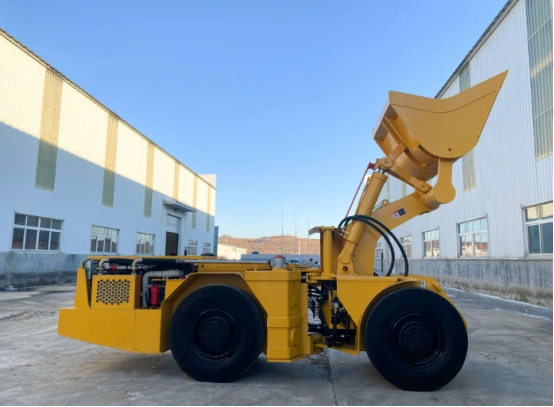
What Does Underground Mining Loader Capacity Include?
Capacity has three working measurements. Rated payload gives the permitted mass, bucket volume gives the available space, and completed cycles per shift turn both figures into production. LHD loader capacity should describe one defined duty.
Rated Payload Sets the Working Mass
Underground loader payload is the rated mass carried during tramming. Rock density may fill the bucket before it reaches that figure, or the payload limit may arrive with volume remaining. Use the value from the technical offer because bucket changes, tires, and attachments affect operating limits.
Bucket Volume Becomes Tonnes through Material Data
LHD bucket capacity is stated in cubic metres. Convert that volume with this field calculation:
Effective bucket payload = bucket volume × loose bulk density × bucket fill factor
Use loose density after blasting because a muck pile contains voids. Fragmentation and moisture also change the fill. Sticky fines mixed with oversize rock can add seconds to every loading cycle.
Which Mine Data Sets the Required Capacity?
Your shift target sets the production task, while the route controls completed cycles. Collect the numbers from the working area. Maximum speed excludes corners, queues, rough floor, and time at the dump point.
Production Target and Cycle Time
Build one complete cycle from loading, travel, positioning, dumping, return, turning, and routine delay. Then use:
Completed cycles per shift = productive minutes ÷ average cycle minutes
Required payload per cycle = target tonnes ÷ completed cycles
At a 720 tonne target and 80 completed cycles, the required working payload is 9 tonnes. A 10 tonne class enters the shortlist after density, clearance, and grade checks.
Loose Density and Bucket Fill
A 4 m³ bucket filled to 85% holds 3.4 m³. At 2.4 t/m³, the load weighs about 8.16 tonnes. Use this estimate for truck matching and replace it with site weigh records when available.
How Do the Main Capacity Classes Compare?
Each payload class changes machine dimensions, turning space, tire load, power demand, and the receiving equipment. Scooptram capacity should fit the whole loading system.
|
Payload Class |
Standard Bucket Example |
Mine Fit to Check |
|
4 t |
2 m³ |
Narrow workings, smaller production targets, and truck loading height |
|
10 t |
4 to 4.5 m³ |
Medium production headings, route grade, and ventilation |
|
14 t |
6 m³ |
Wider roadways, higher shift targets, and full articulation space |
|
18 t |
7.5 m³ |
Large production routes, floor loading, and 40 to 65 t mine truck matching |
The 4 tonne WJ-2 records a 2 m³ bucket, 85 kN breakout force, and 104 kN traction. Its current product page lists configuration fields for an enquiry.
At the larger end, the WJ-8 specification records an 18 tonne tramming capacity, 7.5 m³ standard bucket, 300 kN breakout force, and 342 kN tractive force. It measures 11,328 × 3,065 × 2,760 mm and is specified for 5 × 5 m mine tunnels. The same document lists a 2,854 mm maximum unloading height and an application with 40 to 65 tonne mine trucks.
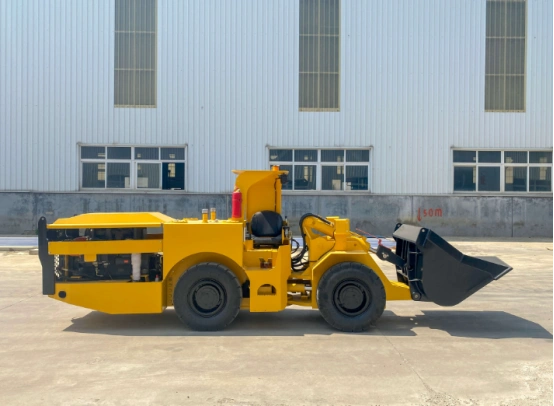
How Do You Check Underground Mining Loader Size?
Underground mining loader size covers the straight machine and its moving envelope. Measure the narrowest width and lowest roof point. Include pipes, cables, drainage, road crown, and space for people. A tape measure at the tightest bend can save a layout change later.
Drift and Turning Clearance
Plot the bucket corner, front frame, rear frame, and tires at full articulation. Check intersections, stope entrances, loading points, and workshop doors. The LHD sizing guide covers route measurements, articulation, and duty cycle.
Mud raises rolling resistance and reduces usable space near drainage channels. Check the route under typical operating conditions.
Truck and Dump Point Fit
Match effective tonnes per bucket with truck payload, then check body height, bucket reach, approach angle, and discharge clearance. The WJ-2 uses an elongated arm for added unloading height. The WJ-8 records a 2,854 mm maximum unloading height. Confirm the final drawing against the receiving truck.
Which Performance Checks Follow Capacity Screening?
A machine has to fit, carry the calculated load, climb, stop, cool, and work through the shift. These checks turn a shortlist into a purchase specification.
Traction, Grade, and Braking
Compare tractive force with loaded mass, grade, rolling resistance, and restart conditions. Keep grade units consistent because percent and degrees describe different values. Review service, parking, and emergency braking for loaded downhill travel. The WJ-8 uses wet spring brakes with spring application and hydraulic release.
Power Source, Ventilation, and Maintenance
Diesel machines add exhaust and heat to the ventilation load. Electric machines need a defined supply, cable route, or charging plan. Your maintenance team needs access to filters, articulation joints, brakes, tires, and hydraulic components. Stopped hours remove completed cycles.
A Capacity Review Built Around Your Mine
Once your calculations reach a short list, a technical review should connect each number to a specific configuration. DALI covers compact units through an 18 tonne machine. Its records pair 4 to 4.5 m³ standard buckets with the 10 tonne class and a 6 m³ bucket with the 14 tonne class. The WJ-8 also lists customized bucket capacity.
This range supports an underground mining loader capacity review based on density, drift geometry, haul distance, grade, shift target, and truck payload. DALI can provide loader ROPS/FOPS and CE documentation. Send those six site inputs so the engineering team can review payload, bucket, route fit, and dump interface.
FAQ
Q1: What Is the Difference Between Payload and Bucket Capacity?
A: Payload is the permitted material mass in tonnes or kilograms. Bucket capacity is volume in cubic metres. Loose density and fill factor convert LHD bucket capacity into a working payload estimate.
Q2: How Do You Calculate the Required Underground Loader Payload?
A: Divide the shift tonnage target by realistic completed cycles. Include loading, travel, positioning, dumping, return, and normal delays. Compare the result with the rated underground loader payload.
Q3: Which Underground Mining Loader Size Fits a Narrow Drift?
A: Measure the narrowest width, lowest roof, tightest turn, and installed services. Check the articulated envelope, bucket corner, tire path, and passing space. Straight body width covers one part of the fit check.
Q4: Is a Larger Bucket Always Linked to More Production?
A: Production depends on effective tonnes per cycle and completed cycles per shift. Dense rock may reach the payload limit before a large bucket fills. Tight turns and loading time also affect cycle count.
Q5: What Information Supports Underground Loader Selection?
A: Provide tonnes per shift, loose density, fill factor, drift profile, turning space, haul distance, grade, road condition, truck payload, dump height, ventilation data, and the required LHD loader capacity.
About Us
Qixia Dali Mining Machinery Co., Ltd was established in 1998, located in Yantai City.
The company is mainly engaged in the design, development, production, installation and training of underground mine equipment and ore processing equipment, spare parts supply and sales.
More

Contact Us
- Xinbang Rd, Private Economy Park, Qixia, Shandong Province, China
- +86 173 5350 8179
- ytdali@ytdali.com
 +86 13553073459


